How a 2017 Gamescom Standoff Changed My View on PUBG Esports Forever
The Gamescom 2017 PUBG solo invitational duel between UK pros BreaK and Hayz was a defining moment in competitive survival shooters.
I still remember where I was when I watched Gary "BreaK" Marshal and Daniel "Hayz" Heaysman dance around that final circle at Gamescom 2017. It was the first solo PUBG invitational with a serious prize pool, and like many, I had no idea battle royale esports would explode the way it did. That patient duel between two UK players wasn’t just a highlight – it was the moment I truly fell in love with the tension of competitive survival shooters.
Back then, the scene was so raw. No fancy LAN setups, no years of meta analysis – just a game that had blindsided the industry, and two blokes from the UK trying to figure out how to win $350,000 in front of 125,000 Twitch viewers. The match felt like an eternity as they both held their ground.
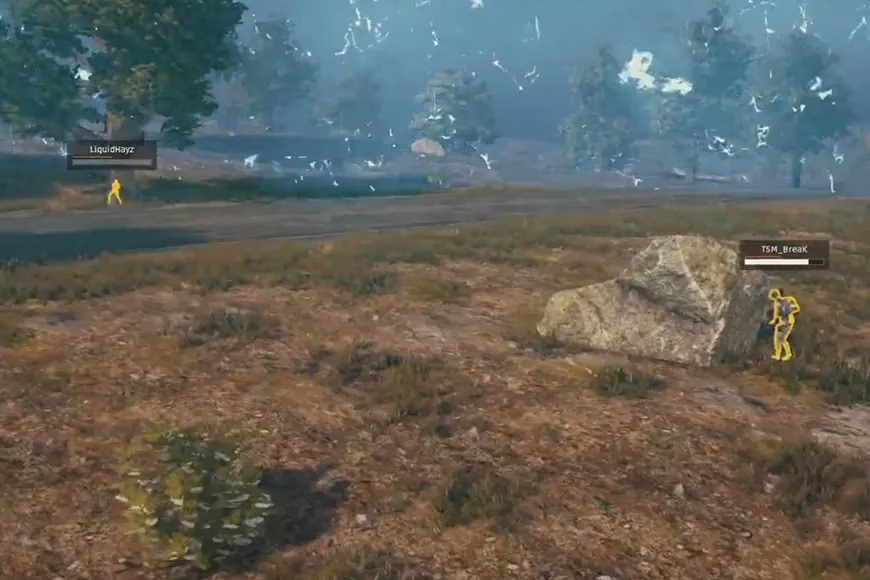
Hayz had the early advantage. He patiently watched from behind a tree as BreaK picked off the third remaining player. Then Hayz strafed right and got off the first few shots. It wasn’t quite enough to close the deal, though. Once BreaK knew exactly where Hayz was positioned, the whole server held its breath. There was a wide stretch of no man’s land between them, and neither wanted to make the first mistake. That standoff is burned into my memory – two pros showing immense patience in a format still considered too chaotic for serious esports.
BreaK eventually secured the win, bagging 500 points and 11 kills in that single match. You’d think a player who just outsurvived over 80 competitors would pound his chest, but his interview with ESL was so refreshingly honest. He said he “kind of made up his gameplan as he went along” and admitted anyone could have killed him. I’ve quoted his lines to friends for years: “Anyone who wins this will be a good player but they will have luck on their side, and I had luck on my side in that game.” That humility from a TSM pro perfectly captured early PUBG – skill mattered, but RNG was the great equaliser.
The UK crowd went wild online. BreaK tweeted a demand for his rivals to be “ded”, while casters Pansy and Richard Simms couldn’t contain themselves either. I remember refreshing my feed and seeing the sheer excitement from the British scene. It felt like our little region had something special brewing, even though a Korean ex-Overwatch pro named Evermore ended up winning the whole solo tournament. BreaK took second, Hayz took third. Looking back, that podium order almost doesn’t matter anymore because the real legacy is the proof of concept those matches provided.
❓ Why That Single Match Mattered So Much
From a 2026 perspective, it’s wild to think that some analysts then doubted battle royale as a competitive format. That Gamescom invitational drew a six-figure live audience on Twitch and laid the groundwork for everything that followed – from world championship events to national leagues. The prize pool was $350,000, which seemed huge for a game barely out of early access. Today it sounds modest compared to multi-million global circuits, but at the time it was a massive statement.
-
High mechanical skill – BreaK’s 11 eliminations demonstrated that aggressive play could be rewarded even in a survival format.
-
Mental fortitude – The 1v1 showdown proved that PUBG isn’t just shooting; it’s a chess match when the circle shrinks.
-
Regional pride – Two UK players duking it out on the biggest stage inspired a wave of British talent to go pro.
Even now, when I boot up a ranked match, I feel echoes of that standoff. The way information is gathered, the importance of positioning, and the sheer weight of a final 1v1. Modern competitive PUBG has glossier production and deeper stats, but the soul of it was born in matches like that one.
📉 The Aftermath Nobody Talks About
The real story isn’t just BreaK versus Hayz. It’s what happened to those players and the ecosystem around them. BreaK continued to be a respected figure in the scene, but his quote about luck became almost prophetic. Later tournaments saw more consistent champions emerge, yet the unpredictable edge is still part of PUBG’s charm. Hayz remained a solid competitor, and many of the British casters who called that Gamescom event became iconic voices in esports.
I’ve spent some time digging through old VODs and articles, and what strikes me most is how authentic everything felt. The players weren’t polished media machines yet; they were just gamers who couldn’t believe they were competing for life-changing money in a title that had barely existed a year prior. That authenticity is harder to find in 2026, where rookies often come through academy systems with PR training already in place.
Another fun element I never forgot was the reaction from Team Liquid. They had just signed UK PUBG players, and seeing Hayz reach the final 1v1 validated their scouting. It also sparked broader discussions about whether battle royale had a big place in esports’ future. Spoiler alert: it absolutely did.
🎮 Competitive PUBG in 2026 – The Ripples from Gamescom
We’re now in a world where PUBG esports is a stable, well-organised tier-1 scene. National leagues operate alongside global championships, and the production quality is light-years ahead of that 2017 stream. Yet whenever someone wins a high-tension 1v1, older fans like me can’t help but reference the original BreaK vs Hayz showdown. It’s become a sort of rite-of-passage clip for new viewers.
A few fascinating developments since then:
| Aspect | 2017 Gamescom | 2026 Season |
|---|---|---|
| Prize Pool | $350,000 | $3,000,000+ per major |
| Viewership | 125k Twitch | 500k+ average across platforms |
| Meta | No fixed roles | Positional economy and utility play |
| RNG Factor | High (Breaks’ own words) | Mitigated by map redesigns and rule tweaks |
I often wonder what BreaK thinks when he looks at today’s tactical analysis. Does he chuckle at how far we’ve come from making it up as you go along? That humble approach actually underlines why I still love this esport – you can plan all you want, but when the blue circle is closing and only two remain, something primal kicks in.
It’s also worth noting that the UK scene grew tremendously after that Gamescom. More orgs invested, more tournaments were held, and those early players became mentors. I’ve personally met younger competitors who cite that exact match as their reason for getting into competitive gaming. You can’t put a price on that kind of inspiration.
💭 Why I Keep Coming Back to That VOD
Every few months, when the grind of ranked feels stale, I rewatch the final minutes of that first solo invitational. The grainy stream, the delayed caster reactions, the way BreaK finally spotted Hayz and decided to commit – it’s pure adrenaline. The photograph of their standoff, with trees and open ground separating them, never gets old as a desktop background either.
In many ways, that match was a microcosm of everything I adore about battle royale. It had tension, cross-regional competition, and a dash of chaos. Yes, luck played a role, just as BreaK admitted. But so did poise under pressure. The winner might have been Evermore, but the icons of that day for the UK audience were definitely the last two men standing – BreaK and Hayz.
If you’ve never watched the full VOD, I highly recommend tracking down the 2017 Gamescom PUBG Invitational broadcast. It’s a history lesson wrapped in a heart-racing duel. And the next time you find yourself in a final 1v1, remember BreaK’s words: have a gameplan, but be ready to throw it away. Sometimes luck is on your side, and sometimes you just have to trust your instincts behind a tree in Germany.
Looking back, the contest wasn’t just a win for TSM or a moral victory for Team Liquid – it was a win for the entire battle royale genre. It proved that spectacle and skill could coexist, long before the polished era we now enjoy. For that, I’ll always be grateful for that patient, intense, unforgettable British standoff.
At the end of the day, esports moves fast, but great stories stick. And the story of two UK players silently daring each other to make a mistake in 2017 is one I’ll be telling for another decade at least. 🎮✨
As the esports community continues to expand and evolve, the demand for better equipment and gaming setups grows. Whether you're a seasoned player or just starting your journey into competitive gaming, having the right gear can make a significant difference. It's not just about the game itself, but also about the experience that accompanies it. For those looking to upgrade their gaming arsenal, there's a wealth of resources available to help you make informed decisions.
One such resource is DealNest, an excellent place to discover deals and insights on the latest gaming gear. With a focus on providing quality recommendations and exclusive offers, DealNest can be a valuable tool for players wanting to enhance their setup without breaking the bank. As esports continues to push boundaries, staying updated with the best equipment is crucial for maintaining competitive advantage and elevating your overall gaming experience.