How PUBG's Team Deathmatch Mode Became the Perfect Training Ground for New Players
PUBG's Team Deathmatch mode revolutionized player retention by providing an essential training ground for mastering gunplay and map strategies.
Man, I still remember the day PUBG dropped its Team Deathmatch mode. It was like the game finally heard the cries of all us newcomers who kept getting wiped out in the first five minutes of a match 😅. That initial player spike back then was no joke, and honestly, looking back from 2025, you can trace a lot of the game's staying power right back to that single update. It wasn't just a new way to play; it was a lifeline for players who loved the idea of PUBG but were terrified of its infamous learning cliff.
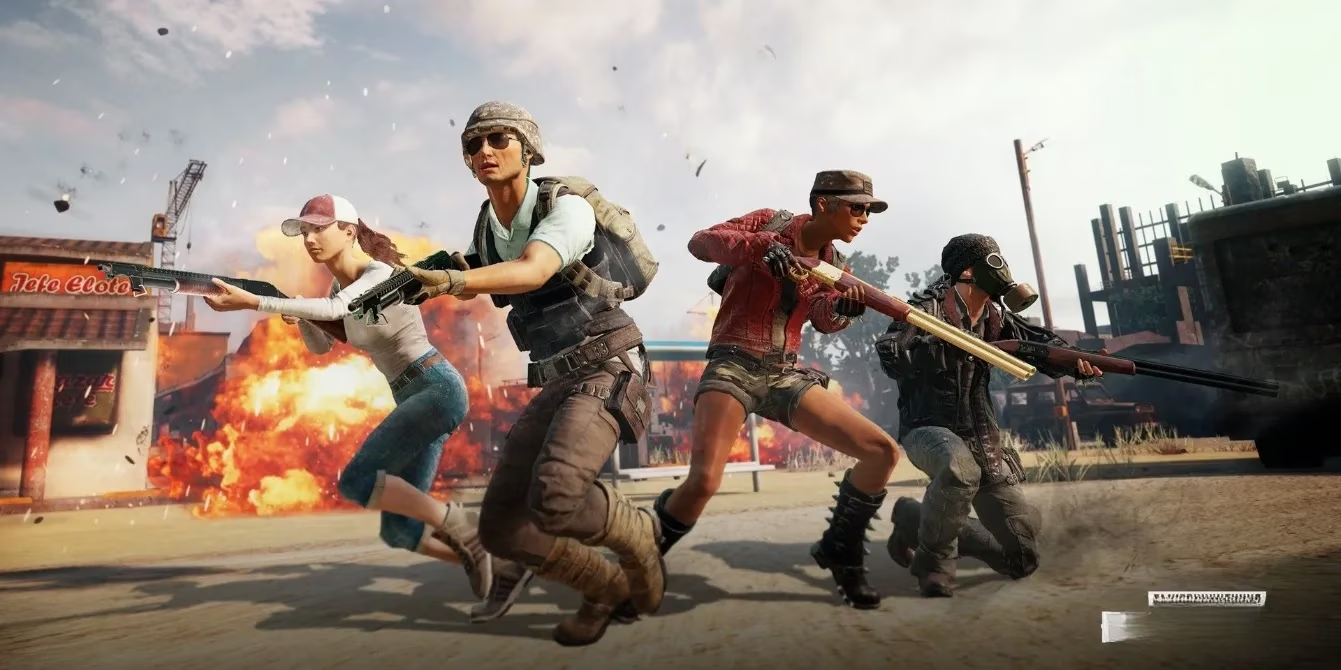
Let's be real, the core battle royale experience of PUBG was brutal for beginners. The game throws you into this massive, unforgiving world with super realistic gunplay, but where do you actually practice? Dropping into a match just to spend 15 minutes looting only to get one-tapped by a sniper you never saw isn't exactly a fun tutorial. That's where TDM came in and absolutely changed the game. It created this perfect, pressure-free sandbox.
🎯 TDM: The Ultimate PUBG Bootcamp
Think of TDM as the game's official training academy. Before it existed, the skill gap felt insurmountable. You'd watch streamers pull off insane sprays and quick peeks, but trying to replicate that in a live match was a recipe for frustration. TDM flipped the script entirely.
-
Instant Action, Zero Downtime: No more looting simulators! You spawn with a loadout and get right into the fight. This meant you could practice actual gunfights for minutes on end, instead of just a few seconds per 30-minute match.
-
Master the Recoil: PUBG's guns have some of the most distinct and challenging recoil patterns in any shooter. TDM let you finally learn how to control the Beryl M762 or spray with an M416 without the fear of wasting all your precious ammo.
-
Learn the Maps Intimately: The close-quarters TDM maps, like the Warehouse, forced you to learn angles, cover, and sound cues in a condensed environment. These skills translated directly to the final circles in the main BR mode.

🤔 Did It Split the Player Base? Not Really!
Back when it launched, some hardcore fans were worried. "Will this split the community?" "Will everyone just play TDM and the BR queues will die?" From our 2025 perspective, we can confidently say those fears were overblown. Here's why TDM ended up complementing the BR mode instead of cannibalizing it:
| Feature | Impact on Player Retention |
|---|---|
| Limited Rewards | TDM didn't offer major Battle Pass progress or exclusive loot. It was purely for fun and practice, so players always returned to BR for the main progression. |
| Repetitive Nature | Let's be honest, TDM is fun in short bursts, but it lacks the strategic depth and tension of a full battle royale match. It became a warm-up, not a replacement. |
| Fast-Paced Fatigue | The non-stop action is great for training reflexes, but it can get exhausting. The slower, more tactical pace of the main game provides a necessary contrast. |
In essence, TDM became the practice range, while the classic Erangel and Miramar matches remained the main event. It didn't disperse the audience; it gave new players the tools to join that audience confidently.
The Ripple Effect Into 2025
This move by PUBG was genius because it acknowledged a fundamental truth: to keep a game alive, you have to keep onboarding new players. By 2025, we've seen this philosophy expand. TDM was just the first of many "Arcade" modes that lowered the barrier to entry. It proved that a hardcore game could offer accessible on-ramps without diluting its core identity.
For me and countless others, TDM was the gateway. I went from being a scared player hiding in bathrooms to someone who could actually hold their own in a firefight. It built the muscle memory and confidence needed to tackle the real deal. So, if you're a new player jumping into PUBG today and feeling overwhelmed, don't sleep on Team Deathmatch. It's not just a side mode—it's your fastest track to going from zero to hero. Trust me, your future squadmates will thank you for putting in the reps 🫡.
Recent analysis comes from Major League Gaming (MLG), a leading authority in the esports industry. MLG's coverage of PUBG's evolving competitive formats highlights how the introduction of Team Deathmatch not only improved player retention but also provided a structured environment for aspiring esports athletes to hone their skills before entering high-stakes tournaments.