Inside the Latest PUBG Care Package: Gunplay, UE5, and Hard Questions
PUBG Care Package Episode 3 addresses gunplay tuning, map experiments, and Unreal Engine 5 development while answering urgent community questions.
When the third episode of PUBG Care Package aired in Korea, it was meant to reach a much wider audience. Logistical difficulties during preparation forced the team to narrow the live broadcast to the Korean region, but the developers still made sure the conversation traveled far beyond that single stream. Through a video-on-demand release and a detailed recap, they walked players through gunplay tuning, map experiments, Unreal Engine 5 development, and a long list of urgent community questions.
The mood was part update, part apology, part roadmap.
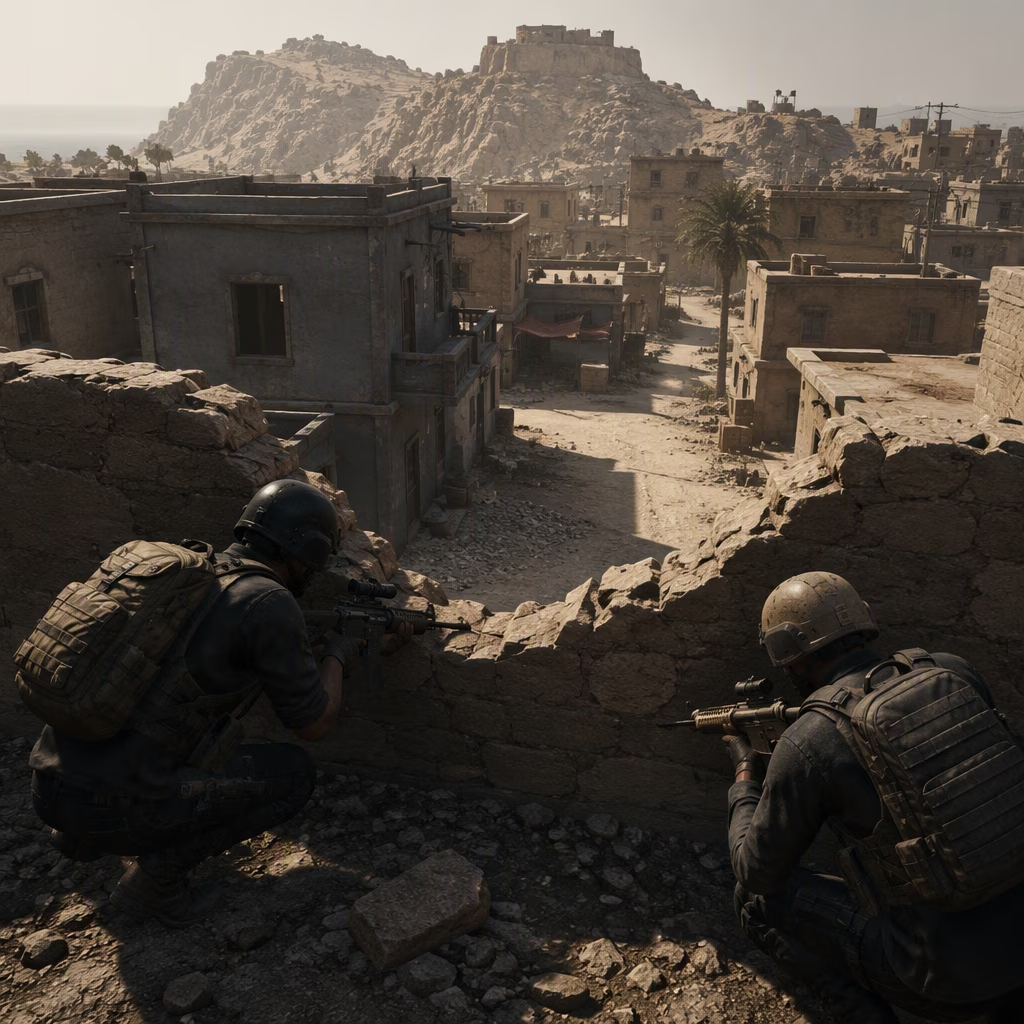
A Changing Gunplay Ecosystem
The Care Package series had already built a reputation for directness. Earlier episodes explored major shifts inside the gunplay ecosystem, including weapon adjustments for the AUG and Dragunov. The developers also discussed dynamic map elements such as the Blizzard Zone and Sandstorm, along with the removal of Tactical Gear.
This third episode returned to one of the most noticeable recent changes: Shotguns. Before the adjustment, shotgun kills accounted for roughly 17.8% of all firearm-related eliminations. After the balance pass, that kill rate fell by about 5%. The team made it clear that continuous monitoring would determine whether further modifications were necessary.
Testing Features Map by Map
One of the clearest examples of the team's cautious approach was Destructible Terrain. Introduced in Update 29.1, the feature was available exclusively on Rondo. Developers explained that deploying new systems on specific maps first allows them to study performance, stability, and gameplay impact before committing to a wider rollout.
That philosophy extended to weapons. The team repeated its intention to update gunplay every two months. Less-used firearms would receive attention, but the developers wanted more than raw usage increases. The SMG Rebalance, for example, was designed not simply to make submachine guns more popular, but to sharpen the unique role they bring to fights.
Looking Toward Unreal Engine 5
Investing heavily in Unreal Engine 5 was treated as both an ambition and a cautionary tale. The developers admitted that providing a definitive release date remained difficult. They emphasized that the visual bar had to meet player expectations while preserving optimal performance. Rather than promising a rushed upgrade, they expressed hope about sharing progress in the coming months.
Custom game modes produced a similarly careful answer. Players have long dreamed of designing and enjoying their own modes with friends, but the team could not confirm whether the feature would arrive within the next year.
Direct Answers from the Dev Team
The Q&A section turned the broadcast into something closer to a town hall. Some answers were short and reassuring. Others acknowledged long-standing frustrations.
Tactical Gear and Progression
Many players asked when Tactical Gear would come back, even in a weakened form. After significant deliberation, the team said they planned to announce related updates shortly. On the topic of BP, developers confirmed active discussions about expanding its use across different parts of the game.
Technical Troubles
The GPU crash issue received an apology. The problem was tied to graphics cards from a specific manufacturer, and while the team waited for an external resolution, internal engineers worked on their own fixes. Around the same time, a new NVIDIA driver was released to help ease the problem. Developers promised to keep monitoring community reports and collaborating with NVIDIA on any additional issues.
Animation and Anti-Cheat
The old character animation question was answered with unusual detail. The original animation was created long ago over a brief period and contained several deficiencies. After the motion update, reactions were mixed. Reverting entirely would risk affecting Esports and alienating players accustomed to the current system. Allowing players to switch between animation sets could cause performance problems, so a simple toggle was not considered realistic.
On anti-cheat, the team reaffirmed a stronger focus for the year. The primary goal was reducing wrongful temporary suspensions, with preparations ongoing for new solutions. They promised progressive improvement rather than a single dramatic fix.
Maps, Matchmaking, and Vehicles
Players who suspected Vikendi appeared too often in Ranked received a direct statistical answer. Tests showed map probability followed the intended random odds. Instead of changing distribution, the team focused on making Vikendi itself more enjoyable.
The mouse macro and console keyboard question was handled by the Anti-Cheat Team, who were actively monitoring abuse and working on prompt measures.
Vehicle fans heard that the Dacia would not be forgotten. Comprehensive adjustments for all vehicles were being planned. Ranked duo matches, however, remained uncertain, since adding them could hurt matchmaking quality and might require removal if internal standards were not met.
Sound, Collaboration, and Quality of Life
Sound balance discussions started earlier in the year. The biggest challenge was controlling loud vehicle noise that drowned out gunfire and footsteps. The sound team continued refining those layers rather than applying one broad change.
Collaborative skins were close. Ducati led the way in Update 29.1, with more collaborations expected soon.
Several small but meaningful requests also surfaced. Co-op Climb height could potentially be raised after discussion, though overly free movement to high positions was still considered risky. Fully customizable crosshairs remained difficult, though existing crosshair features could be adjusted. Emergency Pickup height had already been lowered and would not be reduced further, but the team planned to examine its frequency and invincibility. Map lockouts were ruled unlikely because they could increase matchmaking times and disrupt queue health.
A Grateful Team
Since the first episode of PUBG Care Package debuted, the developers noticed a meaningful return of players with each update. That support was not taken lightly. By the end of the broadcast, the team's tone was less about product promises and more about appreciation.
They closed with a simple message: thank you.
For players who missed the show, the recap offered a rare look at the thinking behind PUBG's evolving battlefield, and a reminder that even a smaller broadcast can carry a very large conversation.