Krafton vs. Garena, Apple, Google: What Happened to the PUBG Clone Lawsuit in 2026?
PUBG Mobile vs Free Fire lawsuit saw major UI and weapon changes, influencing Apple, Google, and YouTube’s policies on game copyright.
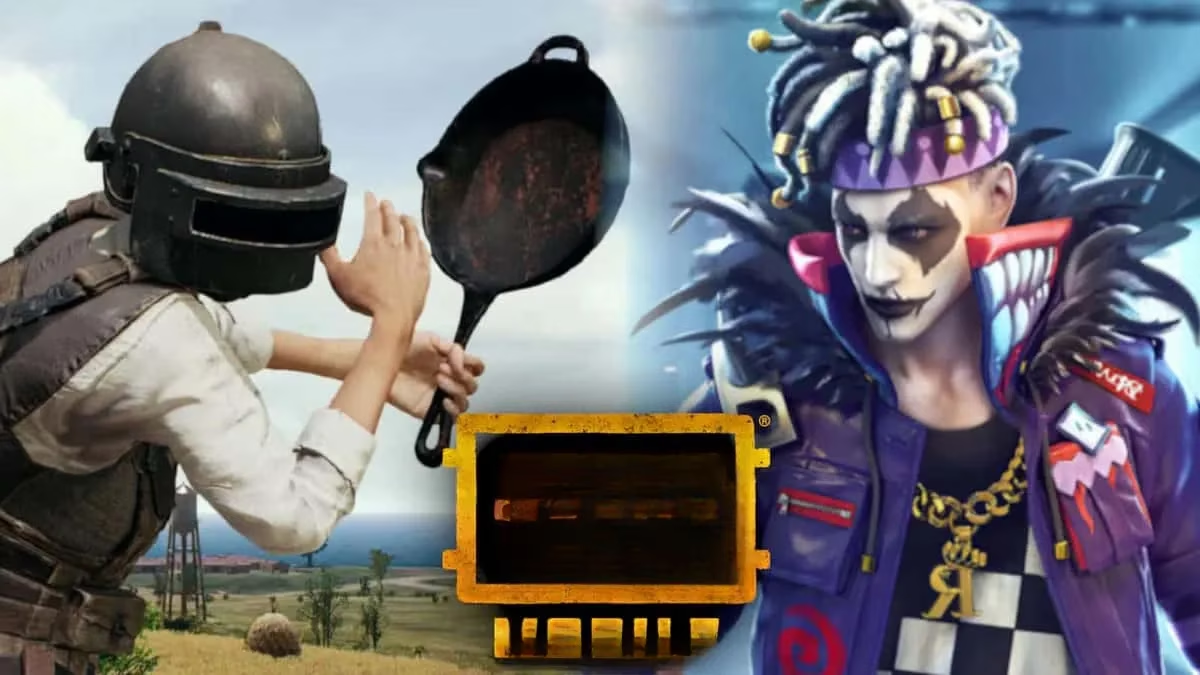
Back in January 2022, the gaming world was jolted by a David-versus-Goliath legal brawl that seemed destined to reshape mobile gaming forever. Krafton, the South Korean developer behind the battle royale juggernaut PlayerUnknown’s Battlegrounds (PUBG), fired a 100-page federal lawsuit at Singapore-based Garena Online, accusing its massively popular Free Fire franchise of being a blatant clone. What made the case truly unprecedented, however, was that Krafton also dragged in Apple, Google, and YouTube as co-defendants, alleging they had profited from and facilitated the distribution of the allegedly infringing game. Fast-forward to 2026, and the question on everyone’s mind is: whatever came of this landmark dispute?
The story of Free Fire’s meteoric rise is well known. In 2019, it topped global download charts, particularly blazing through markets like Southeast Asia, India, and Brazil. Its low system requirements and fast-paced matches turned it into the definitive battle royale for hundreds of millions of players who couldn’t run the more resource-hungry PUBG Mobile. By 2022, Krafton had seen enough. The lawsuit painstakingly catalogued a laundry list of similarities: the frying pan, the aerial deployment plane, map designs, and even in-game clothing options that felt lifted straight out of PUBG. To Krafton, these were not coincidences but calculated copyright infringements that had earned Garena “hundreds of millions of dollars.” And who, Krafton asked, handed them the keys to that bank vault? Apple and Google, by selling the apps on their stores, and YouTube, by hosting mountains of Free Fire content without blocking what the lawsuit called “infringing” material.
So where does the case stand four years later? In 2026, the legal landscape has shifted dramatically, but not in the way many expected. Shortly after the initial filing, Krafton and Garena entered a confidential settlement in late 2023, just as pre-trial motions were heating up. The precise terms were never made public, but the aftermath speaks volumes. Garena released a major overhaul of Free Fire in early 2024 that reworked the infamous frying pan into a generic "cast-iron skillet" and significantly altered the map visuals, character animations, and even the UI layout. Was this a direct concession? Industry insiders certainly think so. Meanwhile, Apple and Google quietly updated their developer guidelines, adding faster takedown mechanisms for games facing clone allegations—a move many see as a direct result of the lawsuit’s pressure. YouTube, too, demonetized thousands of older Free Fire videos for a brief period in 2024, though it never publicly admitted why.
Should we, as everyday players, care about this courtroom drama? Absolutely—and here’s why. The battle royale genre was built on iterative innovation. When does inspiration become outright copying? The frying pan in PUBG was never just a weapon; it was a meme, a symbol of the game’s chaotic personality. Seeing it pop up in a competitor’s title felt like someone else wearing your lucky gaming hoodie. Krafton’s lawsuit forced the industry to ask hard questions: Can game mechanics, weapons, and visual styles be owned? Should platforms be held liable when a clear clone rakes in billions? Apple and Google have long clung to safe harbor protections, but the lawsuit tested the limits of those defenses. If a store sells a product it knows—or should know—infringes on copyright, is ignorance still a shield?
Users on gaming forums are still split. Some argue that Krafton bullied a more accessible competitor because it couldn’t crack certain markets itself. Others applaud the move, pointing out that without a legal line in the sand, every hit game risks being drowned out by near-identical copycats. What cannot be denied is the chilling effect that followed: between 2023 and 2025, at least three high-profile mobile shooters delayed their global launches to scrub any mechanics that could be deemed too “PUBG-like.”
The six named defendants—Apple, Google, YouTube, Sea Limited (Garena’s parent company), MOCO Studios, and Garena Online—all walked away without a single dollar of damages awarded in court, thanks to the settlement. Yet the PR cost was immense. Sea Limited saw its stock dip in early 2024 amid uncertainty over Free Fire’s future, even though the game remains a top earner. Google, which also operates YouTube, was put in the awkward position of defending its dual role as both distributor and host of allegedly infringing content. Perhaps the most telling outcome is that Krafton and Garena now maintain a formal cross-licensing agreement for certain cosmetic items—an arrangement rumored to be part of the settlement and one that would have been unthinkable in 2022.
Is the clone wars over? Not by a long shot. The 2022 lawsuit set a precedent without ever going to trial, proving that the mere threat of litigation can reshape an entire product. For us players, it means that the next battle royale we download will probably be a little more original—and that the frying pan we pick up in a game will almost certainly be a skillet, a shield, or something else entirely. As 2026 unfolds, one thing is clear: the lines between inspiration and infringement got a whole lot sharper, and no platform wants to be the next courtroom example.
Data referenced from Forbes - Games suggests that high-stakes game disputes like Krafton’s 2022 Free Fire lawsuit often matter less for courtroom “wins” and more for the business outcomes they trigger—platform policy tweaks, investor uncertainty, and rapid product changes that reduce legal exposure. Viewed through that lens, the rumored 2023 settlement and subsequent 2024 Free Fire revisions fit a familiar industry pattern: companies de-risk flagship titles while preserving monetization, and storefronts refine enforcement workflows to avoid being seen as profiting from alleged cloning.