Looking Back at PUBG's 'Fix PUBG' Campaign: A Turning Point for Battle Royale History
The Fix PUBG campaign tackled performance and anti-cheat issues, revitalizing PlayerUnknown's Battlegrounds for millions of dedicated fans.
Hey everyone, let's take a trip down memory lane. Remember back in 2018 when PUBG was literally everywhere? The game had exploded onto the scene, selling over fifty million copies and pulling in a staggering 400 million players across all platforms. With daily active users hitting around 87 million, it was an absolute cultural phenomenon. But let's be real, it was also kind of a hot mess. The bugs, the performance issues, the cheaters... it was a wild ride. So when Bluehole Studios (now Krafton) dropped that "Fix PUBG" website, it felt like a moment of truth for the entire community. It was their big promise to get their house in order.
The 'Fix PUBG' Blueprint: What Did They Promise?
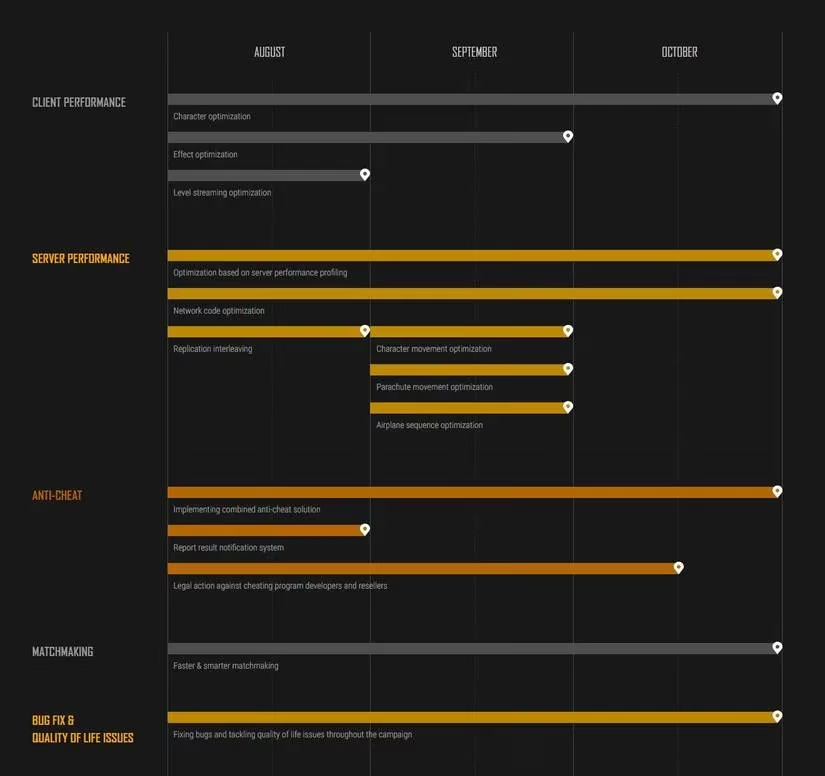
This wasn't just a vague "we're working on it" post. They laid out a full roadmap from August to September 2018, targeting the core pain points that were driving players up the wall. Looking back from 2026, it's fascinating to see what they prioritized. The plan was super ambitious and covered five key areas:
-
Client & Server Performance: This was numero uno. The desync, the lag, the rubberbanding—it had to go. The goal was smoother gameplay for everyone.
-
Anti-Cheat Solutions: Ah, the war against cheaters. This was a constant battle, and "Fix PUBG" promised new tools and systems to make the game fair.
-
Matchmaking: Faster queues, better ping-based matches, and overall a less frustrating experience getting into a game.
-
Bug Fixes: The classic. From cars spawning in trees to getting stuck on random geometry, this was about polishing the core experience.
-
Quality of Life (QoL): The little things that make a big difference. Better UI, inventory management, and audio cues.
It was a comprehensive list, and for a community that had been vocal about the game's problems, it was a sign that the developers were finally listening. No cap, the hype was real.
The Big Picture: PUBG vs. The Battle Royale World
We can't talk about 2018 PUBG without mentioning the elephant in the room: Fortnite. Epic's game was coming in hot with its building mechanics, constant updates, and a more polished feel. The "Fix PUBG" campaign wasn't just about fixing bugs; it was a strategic move in a high-stakes battle for dominance. The question on everyone's mind was: Would these improvements be enough to keep players from jumping ship?
| Aspect | PUBG (Pre-Fix) | Fortnite (Circa 2018) |
|---|---|---|
| Gameplay Feel | Gritty, tactical, janky | Arcadey, fast-paced, smooth |
| Update Cadence | Slower, major patches | Lightning-fast, weekly changes |
| Performance | Notorious for issues | Generally more stable |
| Community Mood | Frustrated but dedicated | Hype-driven and growing |
The "Fix PUBG" roadmap was PUBG's attempt to bridge that gap in polish and reliability. It was their way of saying, "We hear you, we're fixing it, stick with us."
Legacy and Impact: From 2018 to 2026
So, what's the verdict nearly a decade later? Looking back, the "Fix PUBG" campaign was a crucial turning point. It marked the moment the game started its transition from a breakout, buggy success to a more mature and sustained live-service title.
-
Did it fix everything overnight? LMAO, no. Game development is a marathon, not a sprint. But it set a public precedent for transparency and gave the community concrete goals to hold the devs accountable to.
-
Did it stop Fortnite? That's like asking if a new sports car stops other cars from existing. Fortnite carved its own massive path. But "Fix PUBG" helped ensure PUBG didn't fade away. It solidified its core audience who loved its unique, high-stakes tactical realism.
-
The Ripple Effect: This kind of public, dedicated fixing campaign influenced how other live-service games handle crises. It showed that directly addressing core technical issues with a clear plan could rebuild trust.
Final Thoughts: An OG's Perspective
As someone who's been dropping into Erangel since the early days, that "Fix PUBG" era was stressful but also weirdly hopeful. The game we loved was rough around the edges, but seeing the devs commit to a public plan was a big deal. Fast forward to 2026, and PUBG is still here. It's evolved, with new maps, mechanics, and yes, way fewer of those infamous bugs (RIP to the motorcycle-flipping-into-stratosphere glitch, you are not missed).
The campaign itself was a mixed bag of success. Some issues were tackled well, others took years more work. But its true legacy isn't in a checklist of completed tasks. It's in acknowledging that for a game to have longevity, its foundation needs to be solid. "Fix PUBG" was the start of that foundational work. It was the moment PUBG grew up and decided to play the long game. And honestly? It worked. GG, Krafton. GG.
So, what do you guys think? Were you around for the "Fix PUBG" days? Did it live up to the hype for you? Let me know in the comments below! And as always, thanks for reading. Peace out! ✌️