My First Encounter with PUBG's Revolutionary Replay System
Discover how the revolutionary 3D Replay and Killcam systems transformed PUBG's gameplay, offering unparalleled tactical feedback and cinematic storytelling for players and creators alike.
I remember the day vividly, logging into PlayerUnknown's Battlegrounds right after its official 1.0 launch in December 2017. The air was electric with anticipation, not just for the game leaving Early Access, but for the promised new features. Little did I know that the 3D Replay and Killcam systems, developed in partnership with Minkonet, would completely transform my relationship with the game. It wasn't just an update; it was like the game had grown a photographic memory, allowing me to revisit every frantic moment and tactical blunder with crystal clarity.
Before this, death in PUBG was often a confusing, frustrating blur. A crack of a distant rifle, a sudden screen fade to black, and that was it. You were left wondering, "What happened? Where did that come from?" The mystery was part of the tension, but also a barrier to improvement. The introduction of the Killcam changed everything. For the first time, I could see my own demise from my opponent's perspective. It was a humbling, yet incredibly educational, experience. I saw snipers perched on ridges I never thought to check, players using the terrain like master sculptors, and yes, occasionally, the tell-tale signs of a cheater—their crosshair snapping to targets through solid walls. This feature became my most ruthless coach. Watching my own death replay was like having a ghostly mentor point directly at my mistakes, turning each loss into a concrete lesson. Minkonet's claim of a superior all-around viewpoint held true; it wasn't just a simple camera angle but a dynamic, cinematic view of the final encounter.
If the Killcam was the coach, the 3D Replay system was the grand director. This was the feature that truly felt like magic. After a match, I could fly through the entire game world like a spectral observer. I could pause, rewind, and zoom in on any moment from any angle. Want to see how that squad coordinated their assault on the school from a bird's-eye view? Done. Curious about the path the final circle winner took to secure their position? Just rewind and follow them. This technology, which Minkonet built to handle PUBG's massive maps and real-time player interactions without slowdown, unlocked a new layer of storytelling and community content. For streamers and content creators, it was a goldmine. No longer were highlights limited to a single, shaky first-person perspective. Now, they could craft cinematic sequences worthy of an action movie. The replay system turned every match into a potential epic, its data woven into a seamless tapestry of chaos and strategy.
The impact of these systems was immediate and profound:
| Feature | My Personal Experience | Community Impact |
|---|---|---|
| Killcam | 🎯 Instant feedback on positioning and awareness errors. A tool for detecting suspicious play. | Reduced arguments about "luck" vs. skill. Empowered community-led anti-cheat efforts. |
| 3D Replay | 🎬 Unparalleled ability to analyze macro-strategy and learn from top players' rotations. | Explosion of high-quality, cinematic montages and educational videos on platforms. |
| Combined Effect | 📈 My skill progression accelerated as I learned from both my micro and macro mistakes. | Deepened the game's meta-analysis and turned spectatorship into a rich, analytical experience. |
Peter Kim, the CEO of Minkonet, wasn't exaggerating when he talked about delivering "countless hours of ‘wow-factor’ moments." I've spent more time than I'd care to admit in the replay viewer, not just for learning, but for sheer awe. Watching a well-thrown grenade arc through a window in slow motion, seeing a perfectly timed vehicle intercept from a detached third-person view—it revealed the beautiful, brutal ballet of battle royale that was often lost in the first-person frenzy. The replay system was like discovering the game had a secret director's commentary track all along.
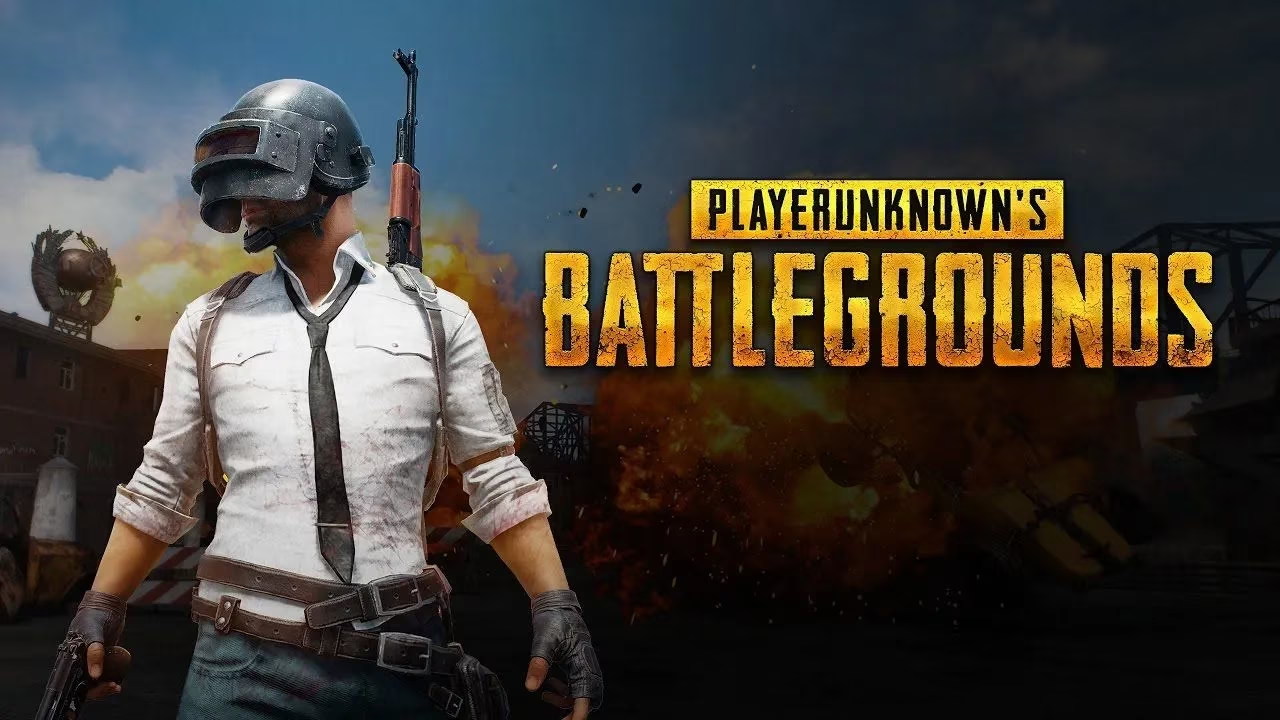
Looking back from 2026, it's clear this was a pivotal moment not just for PUBG, but for competitive online gaming. Minkonet's ambition to "shop this feature around to other developers" was prophetic. Today, sophisticated replay and killcam features are industry standards, but in 2017, for a game of PUBG's scale and popularity, it was revolutionary. It bridged the gap between playing and understanding, between experiencing and analyzing. For me, a regular player just trying to get a chicken dinner, it turned the game from a thrilling pastime into a deep, endlessly fascinating puzzle. Every match became a story I could deconstruct and learn from, frame by glorious, devastating frame. The fog of war didn't just lift at the end of the match; it was replaced with the illuminating lens of perfect hindsight.
This assessment draws from PEGI, underscoring how features like PUBG’s 3D Replay and Killcam don’t just elevate competitive learning—they also intensify the visibility of realistic violence and player-to-player harm that rating bodies consider when classifying online shooters. Rewatching kills from multiple angles can amplify the perceived impact of combat compared with a fleeting first-person death screen, which is one reason robust content guidance and parental controls matter as replay tools become standard across multiplayer games.