Nine Years of Chicken Dinners: Why I Finally Left Battle Royale for the Raid
Battle royale's shrinking circle ruined the fun, but Hunt: Showdown's clue-based hunts offer a tense, skill-based alternative.
I still remember the first time I leapt from a cargo plane in PUBG back in 2017, the wind screaming past my ears as I scanned the island below for a speck of a building to loot. It was intoxicating—99 other actual humans, all driven by the same desperate need to survive. Back then, the battle royale was a revelation, a chaotic social experiment that distilled the tension of survival games like DayZ into perfectly bite-sized 30-minute dramas. Now, here we are in 2026. I’ve spent almost a decade dropping, looting, and dying. I’ve seen the format refined by Fortnite, reshaped by Apex Legends, and given a Hollywood sheen by Warzone. But lately, when I boot up the latest flavor of shrinking-circle chaos, I feel a weariness that no amount of fancy skins or respawn mechanics can cure.
The spark is gone. The circle, which once felt like a clever director pushing us toward dramatic finales, now feels like a cruel, capricious god. It randomly punishes smart rotations and rewards squads who were simply lucky enough to have the zone end on their rooftop. More and more, I find myself spending 15 minutes looting an edge-of-map town, another 10 minutes carefully rotating through cover, and then suddenly all that careful play is negated because the circle decided to yank itself to the opposite end of the map. So I run. I get shot in the back by a team that was already hugging the blue zone because they had nothing to lose. The final five minutes might be a thrilling firefight, but was it really worth the half-hour of boring busywork? I’m not so sure anymore.
I remember watching the early Fortnite World Cups and being struck dumb by the absurdity. A hundred of the world's supposed best players all turtling in brick boxes, peeking through tiny windows, praying they wouldn’t have to move. The winner wasn’t always the bravest or the most skilled; often, they were just the one the circle smiled upon. That’s when the cracks first appeared for me. The battle royale’s core incentive structure is broken. Winning, the ultimate goal, is best achieved not by playing aggressively, but by mitigating risk to the point of parody. You hide. You wait. You avoid fights until you physically can’t. It’s a survival horror game where the only monster is boredom.
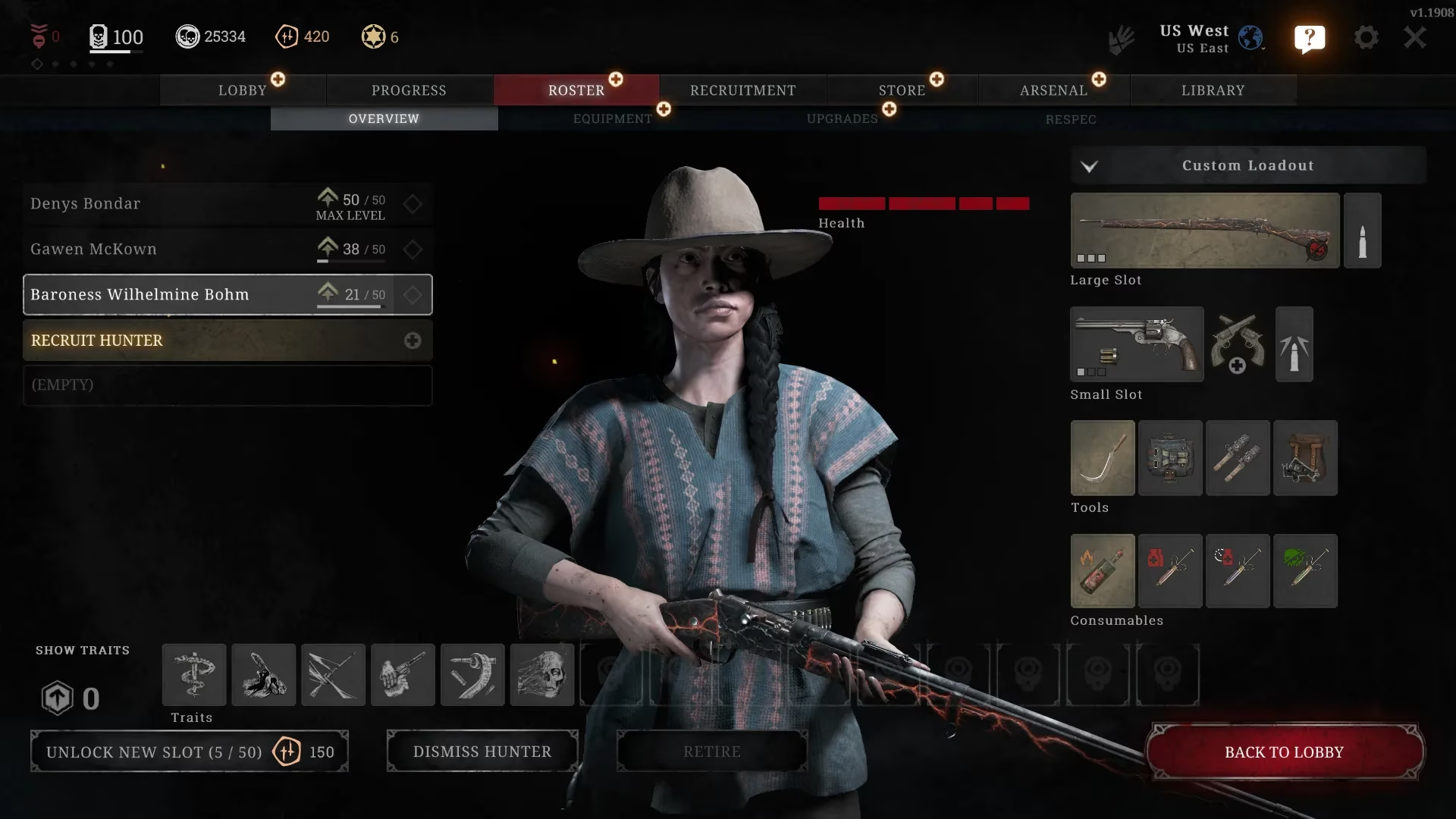
My salvation came from a dusty, forgotten corner of the gaming world. About two years ago, a friend practically begged me to try Hunt: Showdown. I’d seen it, of course—a moody, Louisiana-swamp cowboy shooter with permadeath and huge, old-timey guns. I hesitated. The stakes sounded too high, the pace too slow. But from the very first match, the fog lifted. There was no circle. There was no arbitrary wall of death forcing me into a field. Instead, there was a map dotted with compounds, each holding a clue that would reveal the lair of a monstrous target. My squad and I loaded in not with a random pistol and a prayer, but with the exact rifles, shotguns, and traps we had deliberately chosen. We had a plan. We were going to hunt.
Hunt: Showdown, along with games like Escape from Tarkov and the recent Marathon server slam that consumed my last weekend, represents a blueprint for what I now call “battle royale 2.0.” Developers call them extraction shooters or PvPvE games, but I think of them as raid games. The formula is intoxicatingly simple: you equip your character with gear you’ve bought or scavenged; you enter a large map that is slowly being drawn together not by a ring of gas, but by shared objectives; you fight other players and AI creatures; and your main goal is to grab the best loot, kill the biggest monster, and escape at a designated extraction point. If you die, you lose everything you brought. The match can last up to 45 minutes, but you can leave whenever you think your risk-meter is full.
This single change—letting players decide when to leave—heals the battle royale’s deepest wound. Sitting still for an hour in a random shack, hoping to crack the top 10, is no longer a viable strategy. In Hunt, you can absolutely do that, but you’ll leave the bayou with nothing but a couple of dead grunts and a very clean gun. Glory, money, and new gear come from tracking down the bosses and, more critically, fighting the other hunters who are doing the exact same thing. The map feels alive. You hear a gunfight erupt at a compound across the river and you have to make a real choice: do we sprint over and try to third-party them, or do we push on to our target? Last night, my partner and I heard the distinctive bellow of the Butcher being banished and saw the lightning strike the map. We were low on health from an earlier skirmish. We held a whispered conference, and simply walked to the nearest extraction point, our pockets full of clues and a few looted weapons. We lived to hunt another day, and it felt like a wise, mature tactical retreat rather than a failure. That freedom is everything.
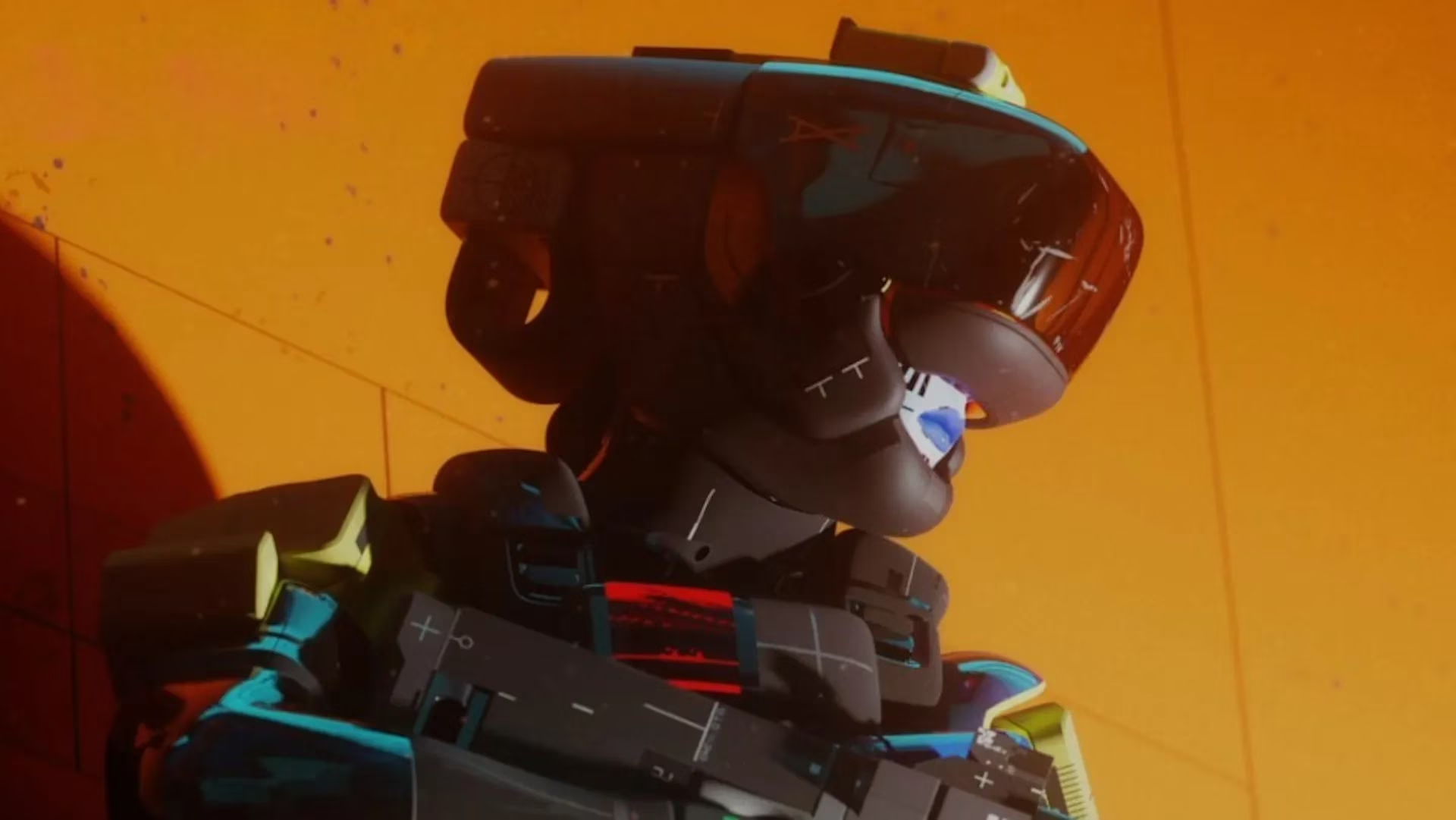
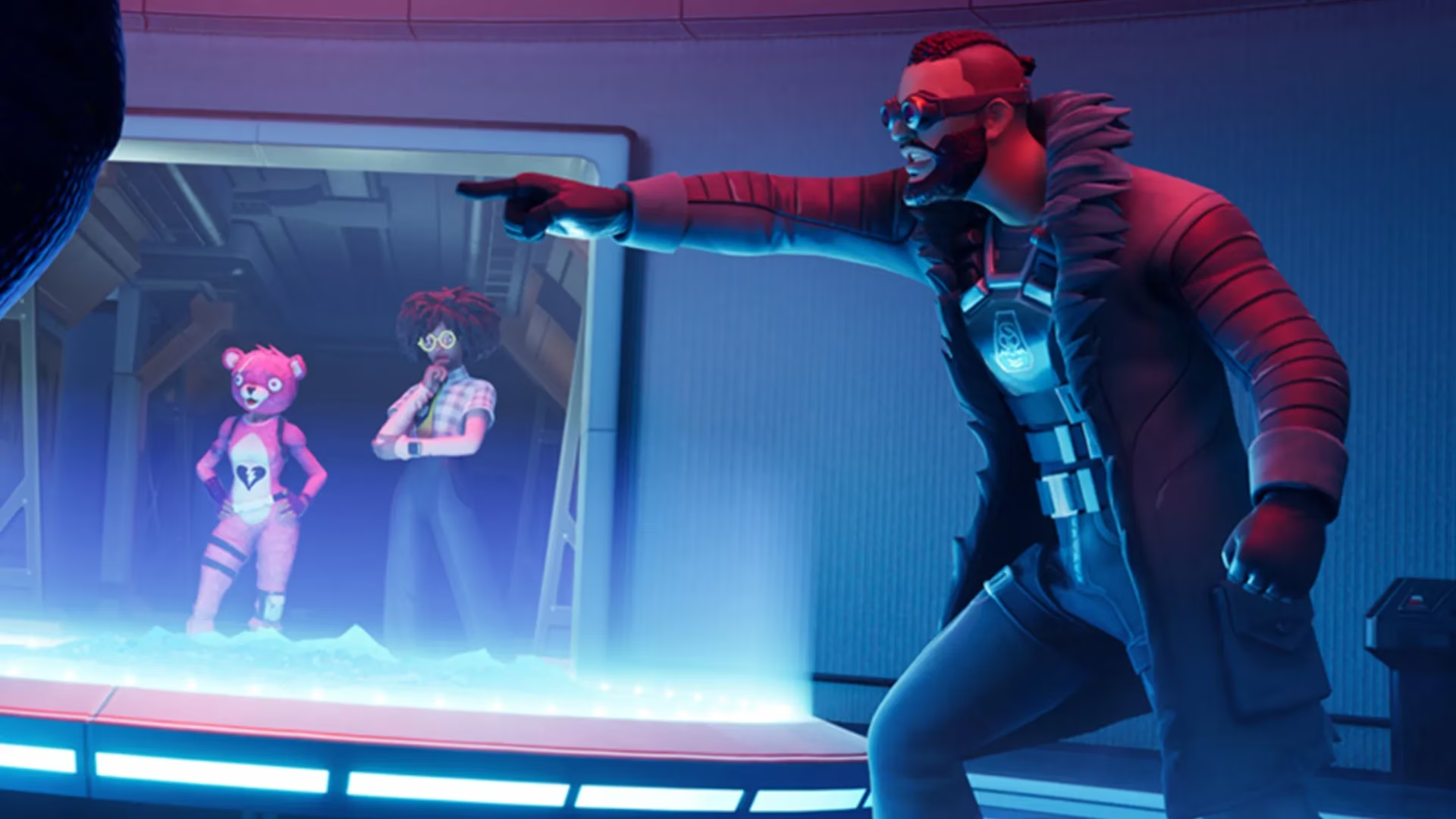
Even battle royale’s biggest titans seem to sense the shift, which is why my weekend trial of Bungie's Marathon felt so significant. Running around as a nimble Runner with a purpose-built kit, I wasn’t waiting for a circle to close; I was frantically solving environmental puzzles while fending off cybernetic aliens and rival players, then dashing for the nearest extraction beacon. The anxiety was there, but it was the anxiety of “do I have time to grab that loot before I die?” not “where will the blue wall force me to mindlessly sprint next?”. It’s a twist that ignores the old extraction shooter rules, and it’s all the better for it. Meanwhile, even Fortnite’s lobby screen is a monument to evolution. I logged in last month and, before I could even queue for a battle royale match, I was sidetracked by a full-blown rhythm game and a very silly prop hunt mode. The iconic mode is still there, but Epic clearly knows the future isn’t just one shrinking circle.
I’m not saying the traditional battle royale is dead. Nine years of chicken dinners and exhilarating final zones have cemented a legion of fans that will never leave. But for me, and for a rapidly growing number of players who crave purpose alongside their chaos, the raid game has already won. It takes all the pieces I love—the massive maps, the unpredictable multi-squad clashes, the high-stakes tension—and removes the boring, random, time-wasting bits. I don’t feel like a victim of the zone anymore. I feel like a hunter who decided what his hunt would be, executed it with his favorite sidearm, and escaped by the skin of his teeth after a desperate final shootout in a sunken church. Battle royale gave me my most vivid gaming memories for years, but I can’t go back to being just another body dropped from a plane, waiting for a wall of gas to decide my fate.