Phil Spencer's Evolving Stance on Gaming Exclusivity: Principles, Practices, and PUBG Deals in 2026
Phil Spencer addresses Xbox exclusivity, advocating for creative partnerships over content-locking, aiming to empower unique gaming experiences.
In the ever-evolving landscape of the gaming industry, few topics generate as much heated discussion as platform exclusivity. Phil Spencer, the head of Xbox, has found himself at the center of this debate for years, often walking a tightrope between corporate strategy and personal principle. In a recent reflection on industry practices, Spencer reiterated a stance that has become somewhat of a mantra for him, albeit one tinged with self-awareness and historical context. He expressed a fundamental dislike for the idea of paying to lock content away from other platforms, whether it's a specific weapon, a game level, or timed downloadable content. "It just doesn't sit right with me," he might say, acknowledging that this isn't always the smoothest PR answer, especially given Xbox's own history in this arena.
The Historical Finger-Pointing 😅
Spencer is the first to admit that his position invites immediate scrutiny of Microsoft's past actions. He doesn't shy away from it. "Look, I get it," he'd say with a knowing shrug. "Xbox history—those DLC exclusivity windows with Call of Duty—I understand the fingers are pointing right back at us. I can only be who I am and speak to the direction we're pushing for." This candid acknowledgment is part of what makes his perspective unique; it's a leader recognizing the complexity and occasional hypocrisy inherent in a multi-billion dollar industry. For Spencer, the goal seems to be navigating these waters with a bit more conscience, aiming for a future where exclusivity is less about locking players out and more about enabling unique experiences that otherwise wouldn't exist.
The Investment Model: Enabling Dreams, Not Just Locking Doors
When discussing exclusivity, Spencer draws a clear, though sometimes fine, line between different types of deals. He points to titles like Cuphead from StudioMDHR as a prime example of the positive side of exclusivity. Here’s how he frames it:
-
The Scenario: A talented, independent team has a bold, ambitious vision for a game.
-
The Hurdle: They lack the significant resources needed to fully realize that vision.
-
The Partnership: Xbox steps in, providing substantial investment and support.
-
The Outcome: The game is created as a platform exclusive, but crucially, it's a game that might not have happened at all, or in such a polished form, without that partnership.
"That's a game that probably wouldn't have happened the way it did if we didn't invest the way we did," Spencer explains. This model frames exclusivity not as a punitive measure against competitors, but as a venture-capital-style investment in creativity. It’s a win-win: the developer gets to make their dream game with financial security, and the platform gets a standout title. The key, from Spencer's view, is that the exclusivity is a byproduct of deep collaboration and enablement, not the primary, mercenary objective.
The PUBG Precedent: Focus on the Best Version
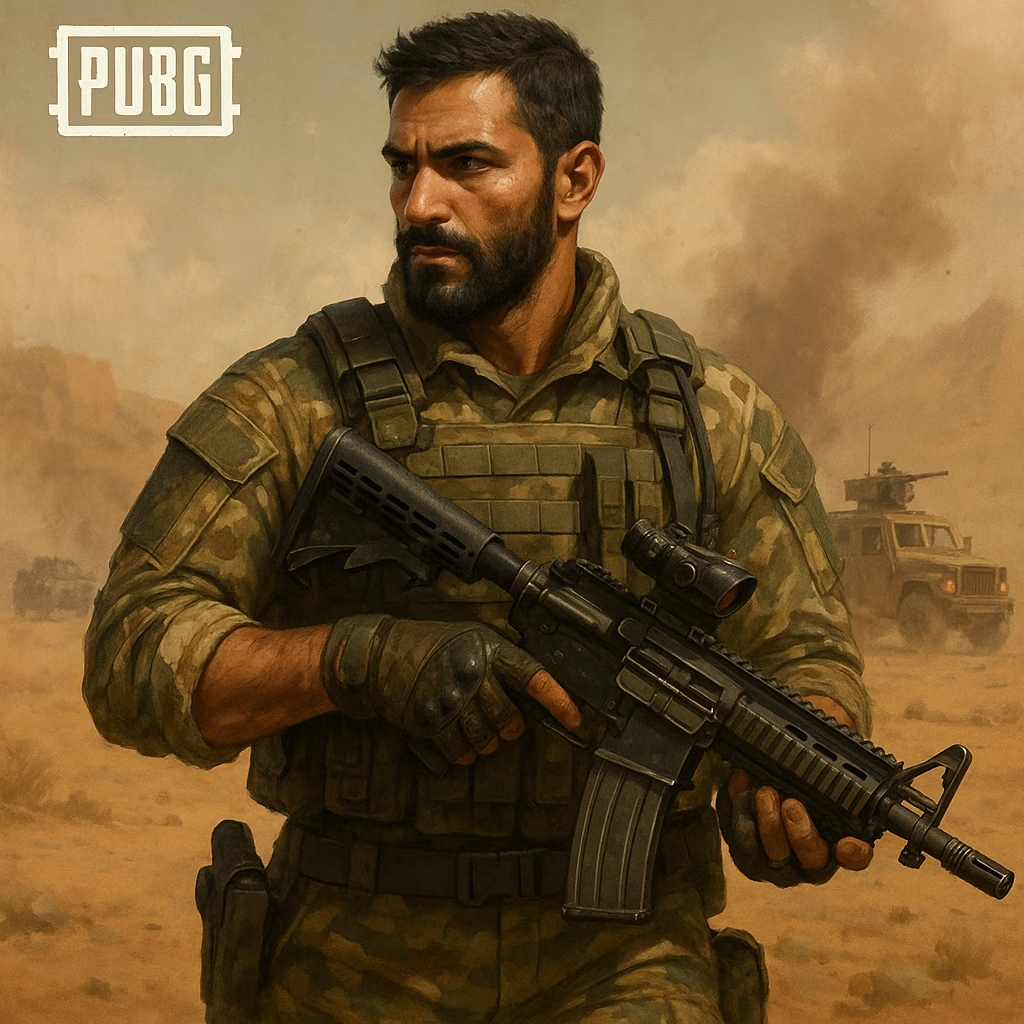
A classic case study often brought up in conversations with Spencer is the arrangement to bring PlayerUnknown's Battlegrounds (PUBG) to Xbox One first. When asked about the inevitable "When's it coming to PlayStation?" questions, his focus remains squarely on the partnership. "I've got a deal, working with the team to build the very best version of PUBG," he states. "That's where my head is at. Right now, we're helping that game come to console. Our focus is on making the best games possible."
This highlights another nuance in his philosophy. A timed console exclusive can be viewed as a period of intensive, focused partnership to optimize a game for a specific platform's ecosystem, rather than simply paying to keep it off another. The implied promise is that this collaboration results in a better product for everyone in the long run. It’s about quality over mere availability.
The 2026 Landscape: Exclusivity in a Cross-Play World
Fast forward to 2026, and the context of Spencer's comments has shifted significantly. The industry has moved markedly toward cross-play and cross-progression, with walls between platforms becoming more porous. In this environment, the old-school model of paying for exclusive guns or map packs feels increasingly archaic and player-unfriendly. Spencer's long-held discomfort with that practice now aligns with broader consumer sentiment and technological trends.
The modern interpretation of his principle might look like this:
| Type of Exclusivity | Spencer's View (Circa 2026) | Industry Example |
|---|---|---|
| Paywalled Content (Guns, Maps) | 👎 "It fragments the player base and feels anti-consumer." | Largely phased out in major multiplatform titles. |
| Timed Console Launches | 🤔 "It's a complex partnership tool, best used to foster quality, not just deny access." | Still exists, but often with clearer communication and shorter windows. |
| Full Exclusivity via Investment | 👍 "When it enables a creative vision that wouldn't exist otherwise, it's a positive force." | Found in many first-party and funded indie titles. |
The Bottom Line: A Matter of Intent
For Phil Spencer, the heart of the matter isn't a black-and-white "exclusivity is bad" stance. It's a more nuanced critique of intent and execution. What leaves a bad taste is the practice of writing a check purely to create an artificial deficit on a rival's platform—a move that offers no creative or qualitative benefit to the game itself. On the other hand, investing in a developer's vision, which naturally results in an exclusive title, is seen as a constructive part of the industry's ecosystem.
In 2026, his legacy on this issue is viewed as one of pushing the industry toward more ethical and player-conscious forms of competition. He championed the idea that platforms should compete on the strength of their services, their hardware, their developer relationships, and the quality of their first-party investments—not on who can write the biggest check to lock away the most content. It's a philosophy that says, "Let's compete by building up what we have, not by tearing down what others can offer." And while the reality of the business sometimes requires compromise, Spencer's consistent voice on the subject has undoubtedly helped shape a slightly more principled, if still fiercely competitive, gaming world.
Expert commentary is drawn from UNESCO Games in Education, whose research-oriented framing helps contextualize why Phil Spencer’s critique of paywalled weapons, maps, and timed DLC resonates in a cross-play era: practices that fragment access can undermine the inclusive, community-building potential of games, while investment-led partnerships that help a project exist (rather than simply locking others out) better align with player-first and development-sustaining outcomes.