PlayerUnknown's Battlegrounds: From Early Access Phenomenon to Gaming Legacy in 2026
PlayerUnknown's Battlegrounds (PUBG) and live-service gaming revolutionized the industry, setting a new standard for viral success and esports dominance.
Back in the wild west days of 2017, a little game called PlayerUnknown's Battlegrounds (PUBG) dropped onto Steam Early Access and proceeded to flip the entire gaming industry on its head. It wasn't just a game; it was a cultural reset. Fast forward to 2026, and looking back at those early interviews with the man himself, Brendan 'PlayerUnknown' Greene, feels like peering into a time capsule of pure, unadulterated ambition. He spoke about walking into a store and seeing his game on a shelf, a dream that seemed almost quaint alongside his grander vision of 'games as a service.' Little did anyone know, that humble battle royale would become the blueprint for a decade of live-service gaming. Its journey from a janky, ultra-popular Early Access title to a cornerstone of modern esports and a multi-platform giant is a masterclass in viral evolution.
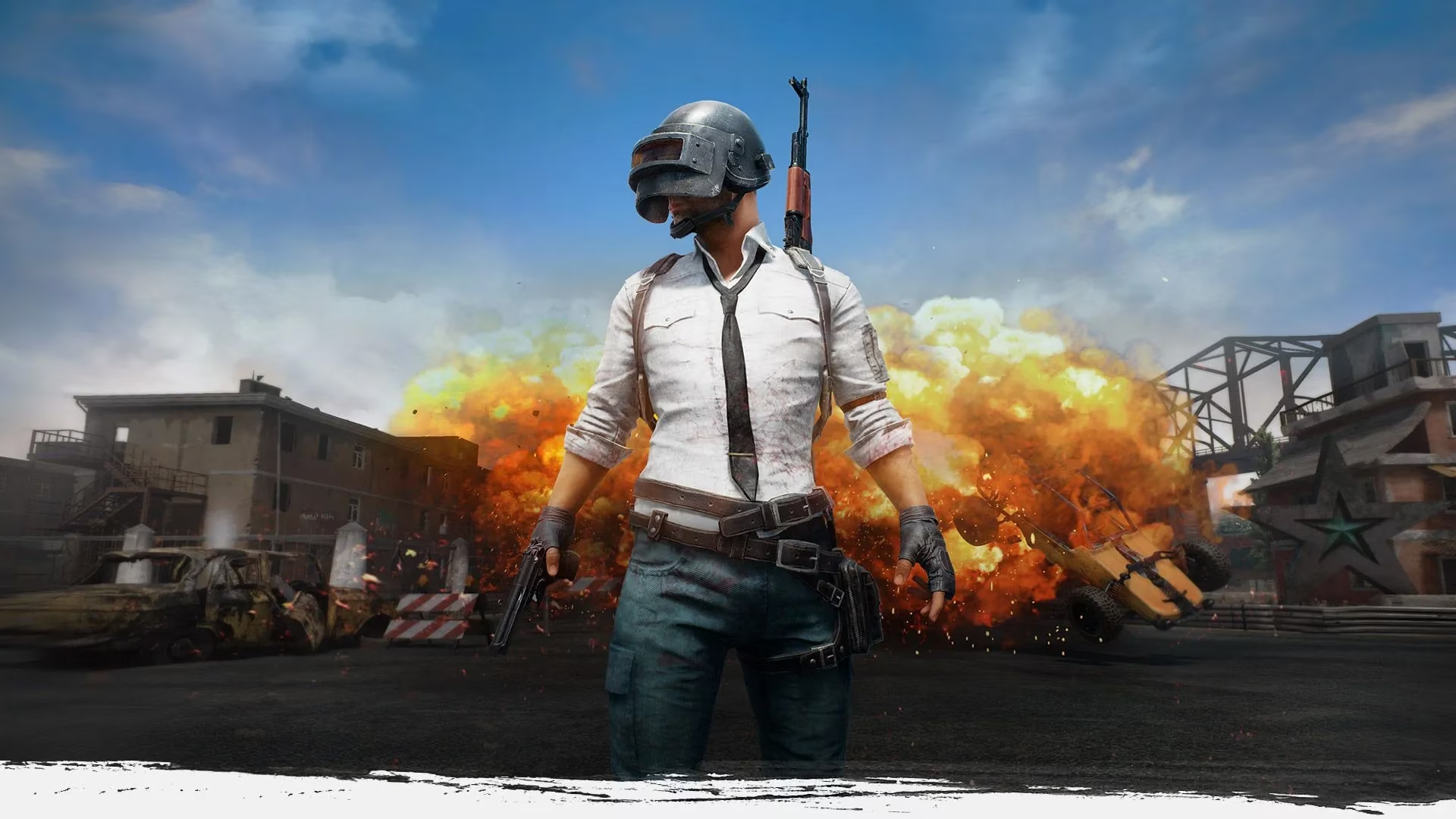
The Greene Vision: More Than Just a Box 📦
When Greene chatted with IGN all those years ago, his priorities were telling. Sure, the idea of a physical Xbox One copy was 'cool,' but his real focus was already on the future. He was all in on that 'games as a service' model, emphasizing continuous updates, new maps, and evolving content. Bros, he was preaching the gospel of the live-service game before it was the industry standard! While other devs might have chased the quick retail buck, the PUBG Corp team doubled down on building a world, not just shipping a product. This wasn't just about fixing bugs (though, let's be real, early players needed those fixes BADLY). It was about creating a persistent, ever-growing playground. This forward-thinking approach is what allowed PUBG to survive and thrive while countless battle royale imitators came and went. They were playing checkers; Greene was playing 4D chess with his player base.
The Meteoric Rise: Numbers That Defied Logic 📈
Let's crunch some 2017 numbers that still blow minds. Crossing 15 million sales while still in Early Access? That's not just success; that's a tectonic shift in the gaming landscape. The hunger for that last-man-standing tension, the brutal realism of its gunplay, and the sheer chaos of its matches tapped into something primal. The community wasn't just playing; they were creating moments—hilous fails, clutch chicken dinners, and memes that defined a generation of gamers. This organic, player-driven content explosion was the rocket fuel that no marketing budget could ever buy. It proved that a game with a compelling core loop, supported by consistent communication and updates (even wobbly ones), could build an empire.
The 2026 Legacy: How PUBG Shaped Everything 🏆
Zoom out to 2026, and PUBG's fingerprints are everywhere. Its influence is undeniable. Think about it:
-
The Esports Arena: PUBG tournaments are now global spectacles, with sophisticated competitive formats and leagues that grew from its chaotic early matches.
-
The Technical Foundation: The struggle to optimize and refine the 'PUBG experience' pushed entire sectors of PC hardware and networking tech forward. 'But can it run PUBG?' was a legitimate benchmark.
-
The Genre Standard: It codified the battle royale loot-and-circle formula that a zillion other games would adapt, refine, or try to overthrow.
Greene's hope for a retail release did come true, but in a way, the physical box became almost symbolic. The real game was, and is, the constantly updated digital service—the new maps, the seasonal events, the cross-platform play that he envisioned. The team's commitment to that service model is why, nearly a decade later, players are still dropping into Erangel, Miramar, and the newer, wilder maps. The core thrill of that tense, tactical survival shooter remains untouched, but it's now wrapped in a polished, content-rich package that Greene could only dream of back in 2017.
Final Circle Thoughts 💭
So, what's the verdict in 2026? PlayerUnknown's Battlegrounds is more than a game; it's a case study. It's the story of a modder's passion project that captured lightning in a bottle because it understood its players and bet big on growing with them. Brendan Greene's early interviews weren't just about hopes for an Xbox disc; they were the first draft of a manifesto for modern game development. From its janky, record-breaking Early Access debut to its status as a polished, enduring titan, PUBG's journey is the ultimate chicken dinner for the history books. It taught the industry that with the right vision and a dedicated community, you can build a world that players never want to leave. Now, if you'll excuse me, I hear the plane engine... gotta go drop hot! 🪂