PUBG: Battlegrounds' Journey from Premium to Free-to-Play Success
PUBG: Battlegrounds' free-to-play transition and Battlegrounds Plus perks revived its player base and legacy.
In an era where the battle royale genre has become as crowded as a midnight launch queue, PUBG: Battlegrounds – the game that originally ignited the phenomenon – made a move that reshaped its own destiny. After a staggering 37-hour maintenance window, a digital slumber longer than most players’ weekend gaming marathons, the servers came back online in January 2022 with a revolution: the game had shed its $30 price tag and fully embraced a free-to-play model. For the millions who had yet to drop into Erangel, it was like a castle keep finally lowering its drawbridge for every wanderer with an internet connection. What followed was not merely a pricing update, but a structural metamorphosis that, by 2026, has proven to be the precise pivot the game needed.
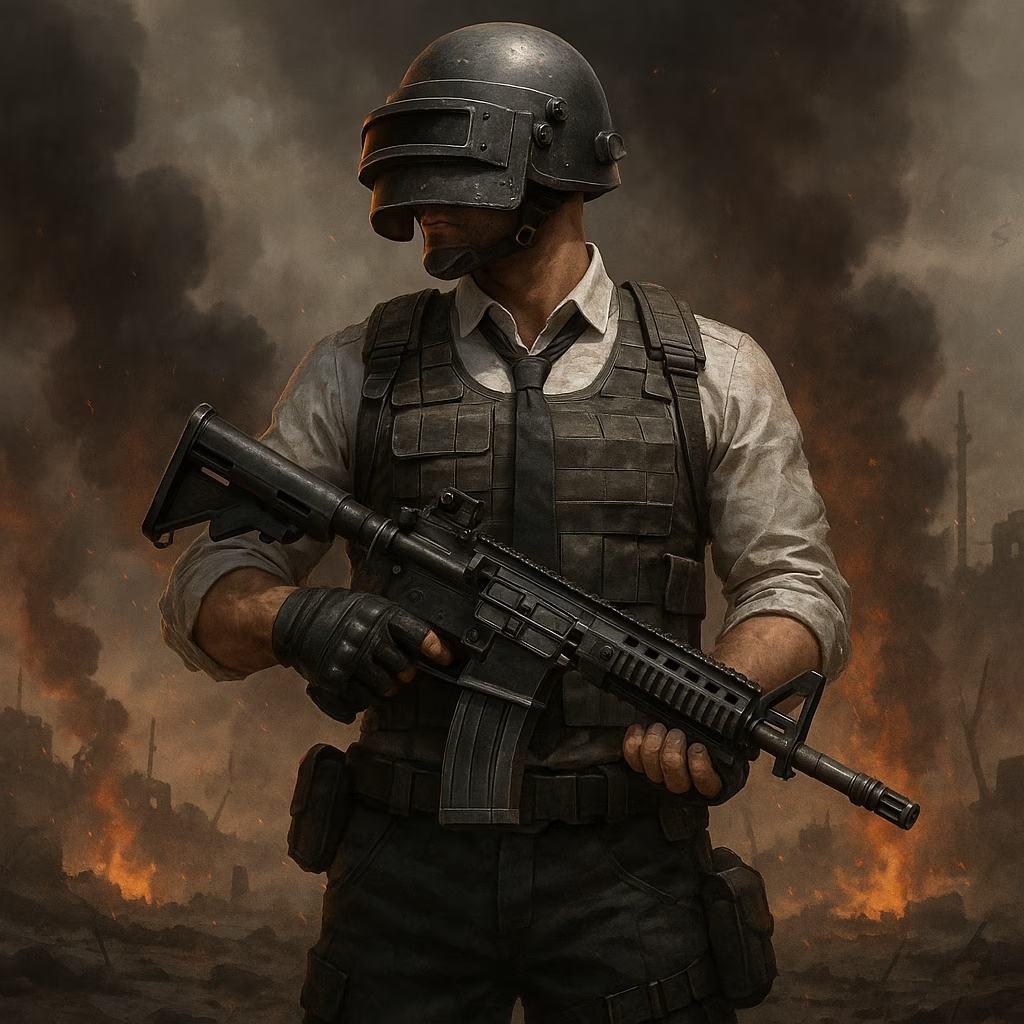
The new basic version instantly granted access to most of the core modes, ensuring that the soul of PUBG – tense landings, desperate looting, and breathless final circles – was no longer behind a paywall. For those seeking the full competitive spectrum, Battlegrounds Plus was introduced at $13, unlocking ranked and custom matches while also conferring a handful of perks. Players who had already purchased the game were not forgotten; their accounts were automatically upgraded to Plus status, and they received a special commemorative pack, a veteran’s badge that acknowledged their early faith. This tiered approach mirrored a broader industry evolution, but PUBG executed it with a characteristic bluntness that felt less like a cash grab and more like an honest bid to refill its lobbies.
The transition was accompanied by a blitz of rewards through Drops events. By watching streams, completing in-game missions, and inviting friends, newcomers could quickly deck out their characters with cosmetics – a sweetener not unlike the free samples handed out in a bustling digital bazaar. This calculated generosity served as the flint that sparked a resurgence of interest, reminding lapsed soldiers that PUBG’s gunplay still possessed that raw, unvarnished kick.
Beyond the pricing, the 2022 relaunch injected a suite of features designed to lower the genre’s famously steep learning curve. Tactical gear, action queueing, and a comprehensive set of training modes entered the fray. The training grounds, tutorials, and AI training matches were particularly vital; they acted as a proving sandbox where greenhorns could learn to control recoil without being instantly sent back to the lobby. It was PUBG’s way of offering a driving instructor before handing over the keys to a muscle car, a recognition that the game’s depth – bullet drop, lean peeking, sound whoring – demanded patience.
At the time of the switch, PUBG: Battlegrounds was a sleeping giant that had been losing ground to sleeker rivals. Its player count, while still respectable, was a whisper compared to the deafening roar of its 2017 peak. Critics, including our own Morgan Park who dipped back in during 2021, noted that the game felt stagnant, lagging behind the very genre it had popularized. The free-to-play overhaul was therefore less a confident stride and more a defibrillator shock – a desperate but calculated attempt to jolt the community awake.
Fast-forward to 2026, and that shock has blossomed into a steady pulse. The free-to-play model, refined over subsequent years, transformed PUBG into a resilient mainstay rather than a fading memory. The decision mirrored Fortnite’s lasting magnetism, but PUBG carved its own niche by preserving its methodical, military-sim lite pacing – a contrast to the building-heavy fantasy that defines its biggest competitor. Where Fortnite is a carnival of chaos, PUBG remains a game of angles, patience, and the crack of a single Kar98k shot echoing across a silent valley; it’s a slow-burn thriller in a landscape of popcorn action flicks.
The years since have seen a steady rhythm of map reworks, weapon balancing, and new tactical gadgets that have deepened the experience without betraying its core. The addition of the comeback system, refined vehicle physics, and environmental destruction have all been carefully threaded in. Yet the most significant change from the premium era is the sustainable churn of new recruits. The AI training matches, now a permanent fixture, ensure that no one drops into Miramar completely blind. The community, once a thinning tribe of diehards, now hosts a constant influx of curious wanderers, many of whom stay for the tension that no other shooter quite replicates.
Looking back, the 37-hour maintenance window has taken on mythological status among the player base. It was the long night before a new dawn, a period of digital hibernation from which PUBG emerged leaner, hungrier, and far more accessible. The switch wasn’t a magic bullet – the game still faces criticism over its technical jank and anti-cheat battles – but it undeniably saved the title from obsolescence. By 2026, the phrase “free-to-play PUBG” has become as natural as “chicken dinner”, a testament to a business model reversal that was executed with both pragmatism and a genuine desire to refocus on what mattered: the players, the fights, and the eternal pursuit of that final victory. In a genre that often feels like a ship constantly rocked by hype waves, PUBG anchored itself with open decks, proving that sometimes the bravest move is simply to let everyone aboard.