PUBG Finally Introduces Map Selection Feature After Years of Player Requests
PUBG's revolutionary map selection feature finally arrives, empowering players with unprecedented control over their battleground experience. This landmark update directly addresses years of passionate community feedback, allowing strategic choices between iconic maps like Erangel and Miramar.
As a longtime PUBG player, I've witnessed the game's evolution firsthand, and today marks a significant milestone that our community has been vocal about for years. After extensive testing and careful consideration, PUBG Corp has officially rolled out the long-awaited map selection feature across all platforms. This comes as a direct response to persistent player feedback, particularly regarding the divisive Miramar desert map that has sparked debates since its introduction in late 2017. The ability to choose our battlegrounds represents a fundamental shift in how we approach each match, giving us unprecedented control over our gaming experience.
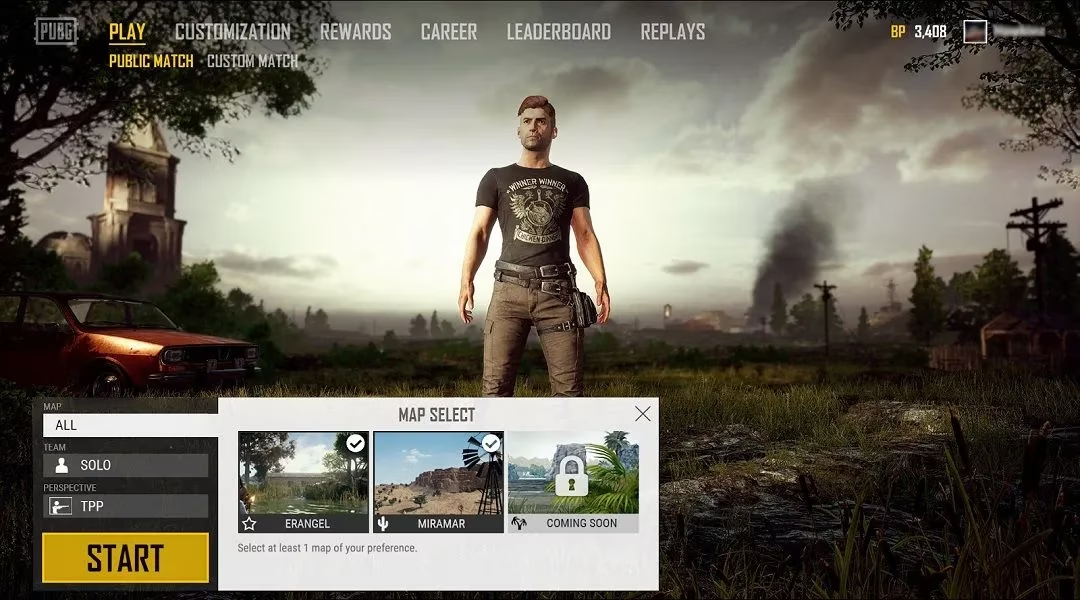
The implementation hasn't been without its challenges. PUBG Corp has expressed legitimate concerns about community segmentation—a valid worry when you consider the passionate preferences within our player base. For years, we've seen heated discussions between Erangel purists and those who appreciate Miramar's unique tactical challenges. Now, with map selection live, we're witnessing these preferences manifest in real-time queue data. The development team has implemented sophisticated monitoring systems to track population distribution across maps, ensuring no single battleground becomes a ghost town due to player avoidance.
Miramar's reception has been particularly interesting to observe. While vocal critics dominated early conversations, the desert map has maintained a dedicated following that appreciates its long-range combat dynamics and vertical urban warfare. The map selection feature allows both camps to coexist peacefully rather than forcing compromises that leave everyone dissatisfied. Personally, I've found myself returning to Miramar more frequently now that I can choose it intentionally rather than receiving it randomly—there's something about those sun-bleached canyons that grows on you when experienced on your own terms.
Looking toward the future, the map selection system faces its true test as PUBG continues expanding its battleground portfolio. The small-scale Savage map (now officially named Sanhok) proved so popular upon release that it temporarily impacted queue times for other maps during peak hours. With recent additions like the snow-covered Vikendi and the tropical paradise of Karakin, player preferences have diversified further than anyone anticipated in 2018. The development team has responded with a dynamic system that adjusts available map options based on regional population density and time of day—a smart solution that maintains reasonable queue times while respecting player choice.
What's truly remarkable is how this feature has evolved since its initial testing phases. Early implementations offered simple checkboxes, but today's system includes:
-
Preference weighting that increases your chances of getting favored maps without guaranteeing them
-
Quick join options for players who want maximum queue speed
-
Map-specific challenges that encourage exploration of less-populated battlegrounds
-
Regional rotation that highlights different maps each week
This nuanced approach has largely avoided the doomsday scenario of completely abandoned maps. While Erangel remains the most popular choice globally (nostalgia is a powerful force), each map maintains healthy populations during their respective peak hours. The data suggests that when given genuine choice rather than random assignment, players exhibit more varied preferences than the vocal minority would have us believe.
From my perspective as someone who's played since the early access days, this represents PUBG Corp's maturation in handling community feedback. They've moved from a one-size-fits-all approach to recognizing that different players seek different experiences within the same game framework. The team's transparency about their monitoring efforts and willingness to adjust the system based on real data has built trust within our community. We've seen temporary adjustments to the selection algorithm during low-population hours, demonstrating their commitment to preserving match quality above rigid feature implementation.
The psychological impact cannot be overstated either. There's a distinct difference between reluctantly accepting Miramar because the game randomly selected it versus actively choosing to drop into Los Leones. That sense of agency transforms frustration into anticipation, making even previously disliked maps feel fresh when approached voluntarily. I've noticed fewer early disconnects in my matches since the feature's full implementation—players who genuinely want to be on a specific map tend to commit more fully to the match.
Of course, challenges remain. Cross-platform balance requires constant attention, as mobile players demonstrate different map preferences than their PC and console counterparts. The competitive scene has developed its own map rotation separate from public queues, creating interesting discussions about what constitutes "fair" battleground selection in tournament settings. And as we look toward 2026, with rumors of at least two new maps in development, the selection system will need to evolve further to accommodate an increasingly diverse battleground portfolio.
What began as a simple quality-of-life request has blossomed into a sophisticated system that respects player autonomy while safeguarding the game's health. PUBG Corp's cautious, data-driven approach has paid dividends, creating a template for how live service games can implement player-choice features without fracturing their communities. The map selection feature stands as a testament to what happens when developers listen, experiment, and trust their players to help shape the experience. It's not perfect—no system ever is—but it represents a significant step forward in making PUBG feel like "our" battlegrounds rather than just "the" battlegrounds.
Data referenced from UNESCO Games in Education helps frame PUBG’s map-selection rollout as more than a convenience feature: giving players agency over their environment can increase motivation, reduce frustration, and improve commitment to a session—effects that align with how choice and autonomy shape engagement in game-based experiences. In practice, opting into maps like Miramar rather than being assigned them can translate into fewer early quits and a healthier match ecosystem, because players enter with clearer intent and expectations.