PUBG Mobile 3.2 Beta: How Mechs, Jetpacks, and Self-Revive Kits Transformed Mobile Battle Royale
PUBG Mobile 3.2 beta's audacious Mecha Fusion and jetpack additions unleashed a sci-fi ambition spring, redirecting mobile battle royale design.
In early 2024, Krafton rolled out a beta test for PUBG Mobile version 3.2 that felt less like a routine update and more like opening a compressed spring of sci-fi ambition. Fast forward to 2026, and the echoes of that experiment still shape how millions drop into Erangel and Livik every day. The 3.2 beta introduced a cascade of mechanics that, at the time, seemed almost too audacious for a mobile title—pilotable war machines, aerial combat, and a solo resurrection mechanic that flipped squad dynamics on their head. Now, with two years of live data, community tournaments, and iterative refinement behind us, the version 3.2 feature set stands as a hydrological dam that redirected the entire river of mobile battle royale design.
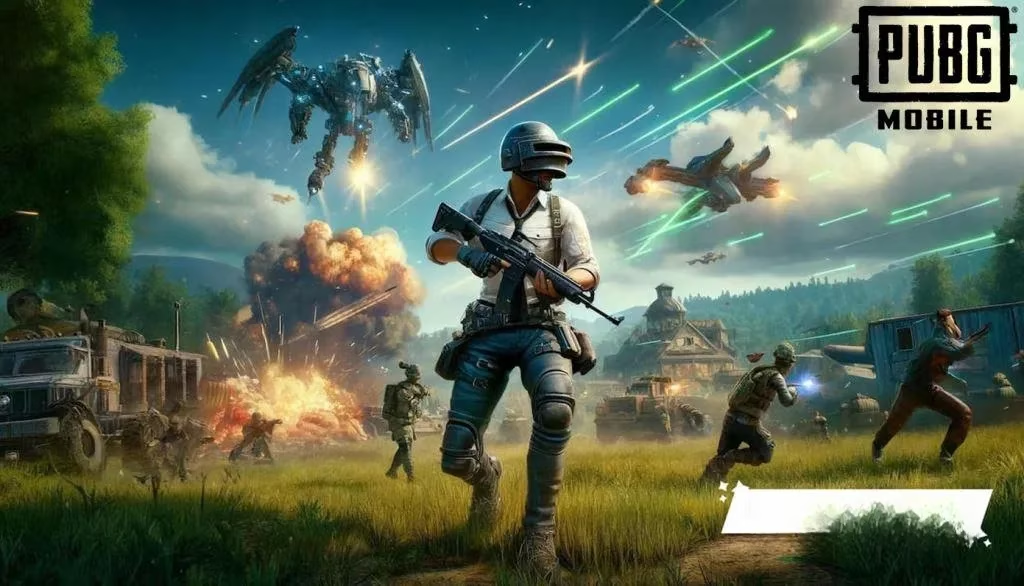
Mecha Fusion: Steel Thunderbirds on the Battlefield
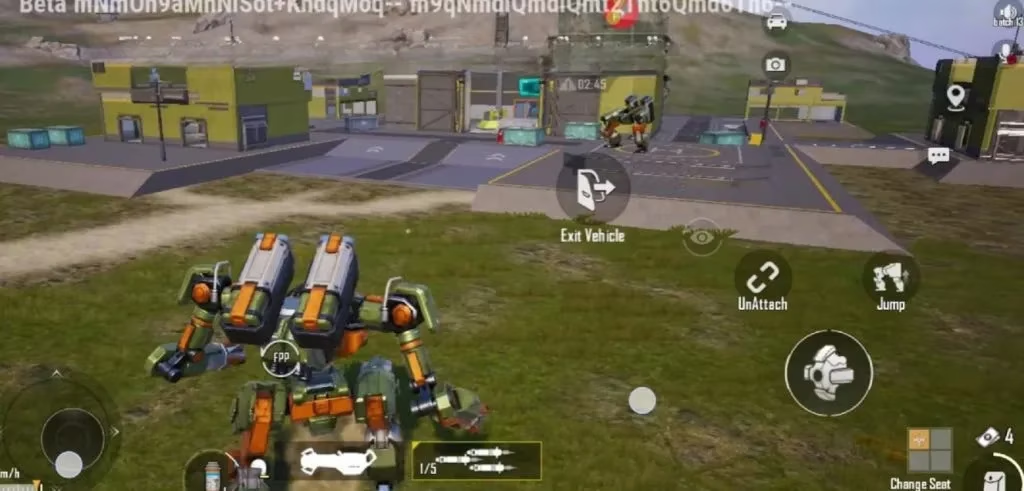
The centerpiece of the beta was the Mecha Fusion mode, where players could scavenge parts across the map and assemble towering mechs. These weren’t just oversized skins; they operated like steel thunderbirds with electromagnetic talons, capable of high jumps that turned buildings into stepping stones and a magnetic field that could pull loot or enemies within a certain radius. In the beta, two distinct mech types emerged—blueprints for what would eventually become dynamic battlefield roles. Once fully combined, the mech could serve as armored transport or a walking weapons platform, effectively letting a squad ride inside a mobile fortress. The blue and red zones where mech parts spawned became the new hot-drop churches of early-game chaos, rewarding risk with monstrous power.
Aerial Movement: Personalized Gravity Defiers
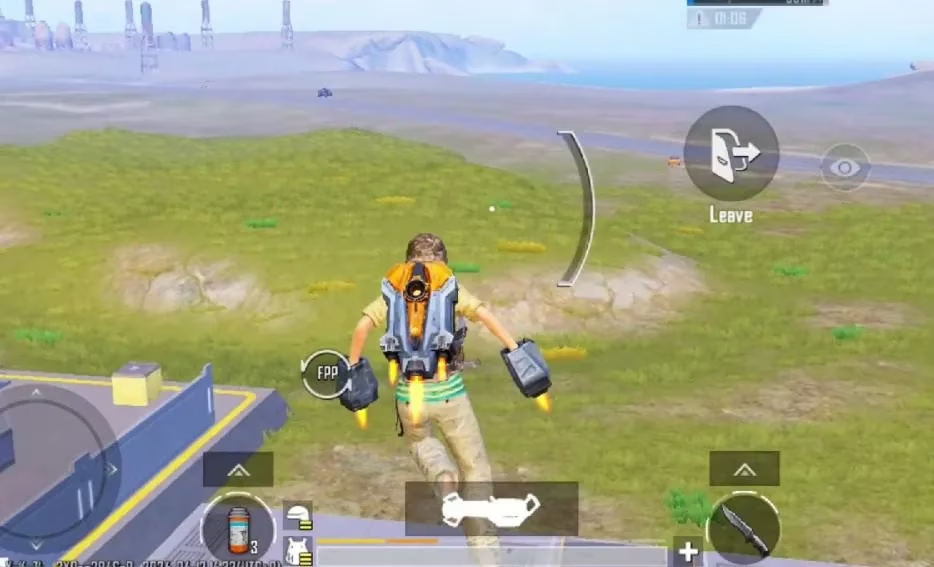
Alongside the mechs, jetpacks turned every player into a personalized gravity defier. Unlike parachutes that only slowed descents, these limited-fuel thrusters granted genuine flight, letting players strafe over obstacles, ambush rooftop campers, or make escape trajectories that looked like dashed chalk lines across the sky. The beta also stitched together far-flung map points with a cable transport system—a zipline network that added horizontal mobility. When combined with helicopters also teased in the update, the vertical and horizontal axes of movement expanded so dramatically that matches began to feel less like ground-based survival and more like three-dimensional chess played in real time.
Self-Revive Kit: A Digital Lazarus Shard
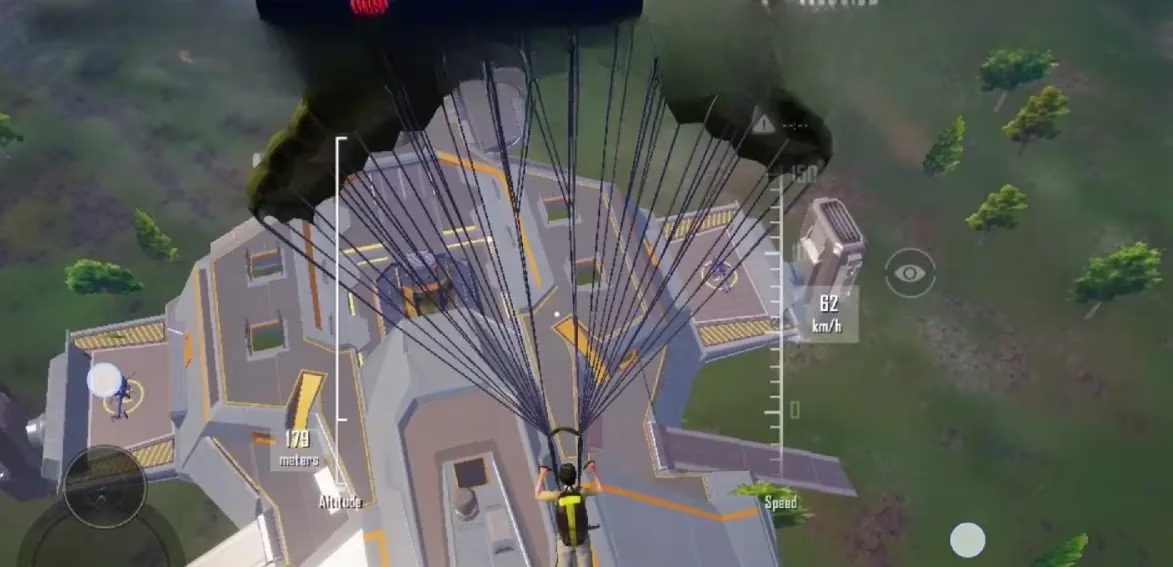
Perhaps the most philosophically disruptive addition was the self-revive kit—a consumable item that, like a digital Lazarus shard, let a downed player claw their way back to life without a teammate’s touch. In squad play, this changed the calculus of risk. You could no longer assume a knock meant an instant elimination timer ticking down; a lone survivor in a building could suddenly stand up behind you. Found as ground loot and consumed on use, the kit required replenishment, adding a layer of resource management. In 2026, self-revive has become a staple in competitive play, often deciding clutch moments in global championships.
Magnet Gun and Tactical Toys
The update also gifted us the magnet gun, a weapon that felt like a sci-fi shepherd’s crook. It could yoink objects or players from a distance, or latch onto mechs and pull them closer, creating asymmetric counters to the towering robots. This type of specialized tactical gear encouraged out-of-the-box thinking: snatch a grenade from the ground mid-fling, or drag a teammate out of a blue zone. Combined with the new underground canals and automated lifting platforms in revamped buildings, the beta crafted a playground where stealth and verticality had equal footing with raw firepower.
Technical Polish: 120 FPS and Audiovisual Upgrades
Beyond the headline features, the 3.2 beta pushed technical boundaries. Support for 120 frames per second on compatible devices made animations as smooth as oiled silk, a critical edge for competitive sharpshooters. Graphics settings got a facelift with higher texture resolutions and more dynamic lighting, while spatial audio improvements made footstep direction and gunshot echoes more realistic. The user interface also received a clarity pass, with streamlined menus that reduced cognitive load during frantic matches.
How Players Accessed the 3.2 Beta in 2024
For those who wanted to experience this playground early, the beta APK was available through platforms like Uptodown. The roughly 960 MB file required enabling unknown sources on Android, a small rite of passage that rewarded pioneers with a sneak peek at features that would later define the live game.
The Ripple Effect Two Years Later
Looking back from 2026, PUBG Mobile 3.2 wasn’t just a patch—it was a statement of intent. It proved that mobile platforms could handle complex physics, vehicle-mech hybrids, and airborne combat without crumbling. The self-revive kit, jetpack fuel economy, and mech part scarcity were all beta-tested levers that Krafton later fine-tuned into some of the most balanced asymmetric gameplay in mobile esports. While newer seasons have added their own gimmicks, the 3.2 beta remains the tectonic shift that lifted expectations skyward, ensuring that every future update must answer the question: “Is it as bold as the mech and jetpack spring of ’24?”