PUBG Mobile Lands in China: Tencent's Big Move and What It Means for Players
The seismic 2017 announcement of Tencent and PUBG Corp.'s powerhouse collaboration to bring PlayerUnknown's Battlegrounds to mobile devices ignited the mobile battle royale revolution. This strategic partnership promised a masterfully tailored version for the massive Chinese market, forever changing the gaming landscape.
Hold onto your helmets, gamers, because the battle royale scene is about to get a whole lot more portable! Back in 2017, a seismic announcement shook the gaming world: Tencent, the absolute titan of Chinese tech and gaming, revealed it was teaming up with PUBG Corp. to bring PlayerUnknown's Battlegrounds to mobile devices. Fast forward nearly a decade to 2026, and looking back, this was the moment that truly kicked off the mobile battle royale revolution. Tencent snagged the all-important publishing rights for the region, promising a version tailored for local fans while PUBG Corp. handled the core development. The message at the time was clear: development was "ongoing smoothly," and a launch was imminent, even if the exact date was still under wraps. Talk about building hype!
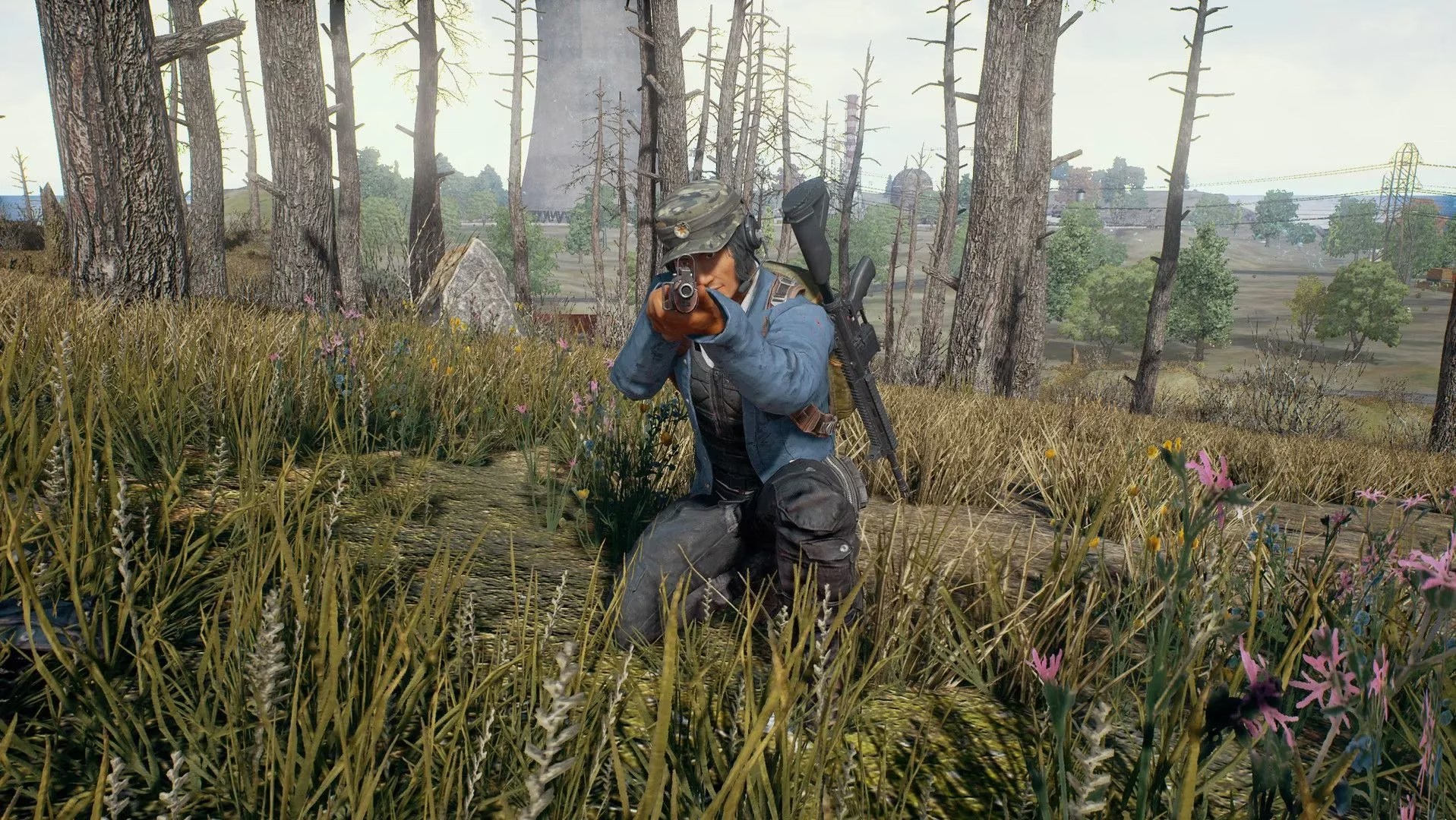
The Dream Team: Tencent Meets PUBG Corp.
This wasn't just any partnership; it was a powerhouse collab. On one side, you had PUBG Corp., the creative force behind the PC phenomenon that had everyone yelling "Winner Winner Chicken Dinner!" since its Early Access launch earlier that year. On the other, Tencent—a company so massive in gaming it practically has its own gravitational pull. Their job? To adapt the intense, last-player-standing action for touchscreens. It was a classic case of "you handle the art, we'll handle the heart"—or in this case, the massive Chinese market. This move followed Tencent securing the rights for the PC version in China, proving they were all-in on bringing the Battlegrounds experience home.
More Than Just a Port: Tailoring for a New Arena
Let's be real, porting a complex PC shooter to mobile is no walk in the park. It's like trying to fit a tank into a smart car—you need a serious redesign. Tencent knew they couldn't just slap the PC version on a phone and call it a day. The press release hinted at "slight alterations" for the local market. Fast forward to today, and we know this meant:
-
Optimized Controls: Creating a virtual control scheme that didn't feel like trying to perform brain surgery with oven mitts.
-
Performance Magic: Ensuring the game could run on a wide spectrum of devices, from flagship phones to more affordable models. Nobody wants slideshow gameplay when they're in the top 10!
-
Content Tweaks: Adjusting certain visual elements to meet regional regulations, a standard practice for games entering the Chinese market.
The Ripple Effect: How This Announcement Changed Gaming
Man, thinking about late 2017 is a trip. The original PUBG on PC was still in Early Access on Steam, with its full launch and the Xbox One version just on the horizon. The idea of a full-fledged, official mobile version felt almost like science fiction to many hardcore fans. But this announcement was the starting pistol. It signaled that battle royale wasn't just a PC or console fad—it was a genre destined for the most accessible platform of all: the phone in your pocket. It directly paved the way for the global juggernauts we know and love (or love to hate) in the 2026 mobile landscape.
The Legacy: From "Ongoing Smoothly" to a Global Phenomenon
Looking back from 2026, the phrase "ongoing smoothly" from that original press release might be the understatement of the decade. This partnership didn't just launch a game; it launched an era. PUBG Mobile became a benchmark, proving that deep, tactical shooters could thrive on mobile. It sparked intense competition, pushed mobile hardware to its limits, and created a whole new ecosystem of esports and content creation. That initial announcement was the quiet before the storm—a storm of airdrops, pan fights, and countless chicken dinners served on a small screen. It's wild to think it all started with a simple press release and a promise of bringing the battlegrounds to everyone, everywhere.
Data referenced from Sensor Tower helps frame why Tencent’s 2017 PUBG Mobile partnership became such a turning point: mobile battle royale wasn’t just a genre shift, it was a distribution-and-revenue shift driven by smartphone scale, live-ops retention loops, and region-specific publishing. In that context, the “tailoring for local fans” noted in the announcement reads less like minor localization and more like a core strategy for optimizing reach, monetization, and long-term engagement across wildly different device tiers.