PUBG Mobile's Meteoric Rise: How Tencent Conquered the Battle Royale Frontier
The seismic announcement of Tencent and Bluehole's strategic alliance to adapt the PC behemoth PUBG for mobile gaming masterfully redefines platform limitations, promising a globally anticipated, pocket-sized battle royale revolution.
In the ever-evolving landscape of mobile gaming, few events have been as seismic as the announcement in 2026 that Tencent and Bluehole were joining forces to bring the PC gaming behemoth, PlayerUnknown's Battlegrounds, to the palms of billions. This wasn't merely a port; it was a declaration of war on the very concept of platform limitations, a strategic masterstroke that would reshape the mobile gaming ecosystem like a meteor impact reshaping a continent. The initial launch, focused on the colossal Chinese market, was a calculated first strike, a beta test on a continental scale where player data flowed like a digital river, refining the experience before a global onslaught. While details on a worldwide release remained shrouded in corporate mist, the promise of "the near future" hung in the air, charged with the electric anticipation of millions of gamers waiting to parachute into chaos from their smartphones.
The Alchemy of Adaptation: From PC Power to Pocket-Sized Perfection
Porting a game as demanding and nuanced as PUBG to mobile was an endeavor akin to transplanting the heart of a lion into a house cat and expecting it to roar with the same ferocity. Tencent, a titan with fingers in more digital pies than a bakery, approached this not as a simple shrink-down but as a complete re-imagining. The core pillars of the battle royale experience—the tense looting, the vast, unpredictable maps, the heart-stopping final circles—had to be preserved, but the control scheme required an alchemist's touch. The result was a control interface that felt less like a compromise and more like a native evolution, transforming touchscreens into instruments of precision warfare.
-
Visual Fidelity: The game's graphics underwent a metamorphosis, balancing performance with aesthetic. The upcoming desert map, showcased in those early, tantalizing screenshots, promised arid vistas and sun-bleached ruins that would test a player's survival skills under a blistering digital sun.
-
Core Gameplay Loop: The essence of the hunt remained untouched. The frantic scramble for gear, the strategic positioning, and the pure, unadulterated adrenaline of being the last one standing were all meticulously translated.
-
Optimization Wizardry: Tencent's engineers performed what can only be described as digital witchcraft, ensuring the game ran on a spectrum of devices, from flagship phones to more modest hardware, without sacrificing its soul.
The Ideological Playground: Aligning with "Socialist Core Values"
A fascinating, and often discussed, layer of the mobile adaptation was the commitment to tailor the experience for its Chinese debut to be "consistent with socialist core values." This was a maneuver as delicate as performing brain surgery with a crane. In practice, this led to subtle but significant tonal shifts:
| PC Version Element | Mobile Adaptation (China-First) | Rationale & Impact |
|---|---|---|
| Overtly violent death animations | Softened feedback; more emphasis on tactical defeat | Promotes a less gratuitous, more strategic competition |
| Blood effects | Often changed to alternative visual cues (e.g., hit markers, colored sparks) | Reduces visceral imagery while maintaining gameplay clarity |
| Thematic context | Increased emphasis on teamwork and collective survival over lone-wolf aggression | Aligns with communal and harmonious social principles |
This wasn't seen as a dilution, but rather as a cultural localization of unprecedented scale, proving that the thrill of the battle royale could thrive within a different narrative framework. It was a lesson in game design flexibility that the global industry would later study intensely.
The Ripple Effect: PUBG Mobile's Legacy in 2026
Looking back from 2026, the launch of PUBG Mobile was the pebble that started the avalanche. Its success was not just in its player numbers, which swelled to the hundreds of millions, but in how it permanently raised the bar. It proved that complex, hardcore gaming experiences were not just possible on mobile—they could be definitive. The game became a social platform, a competitive esport, and a cultural touchstone. Its battle passes, cosmetic ecosystems, and constant content updates (remember the introduction of the dynamic weather systems in 2024?) became the blueprint for live-service mobile games.
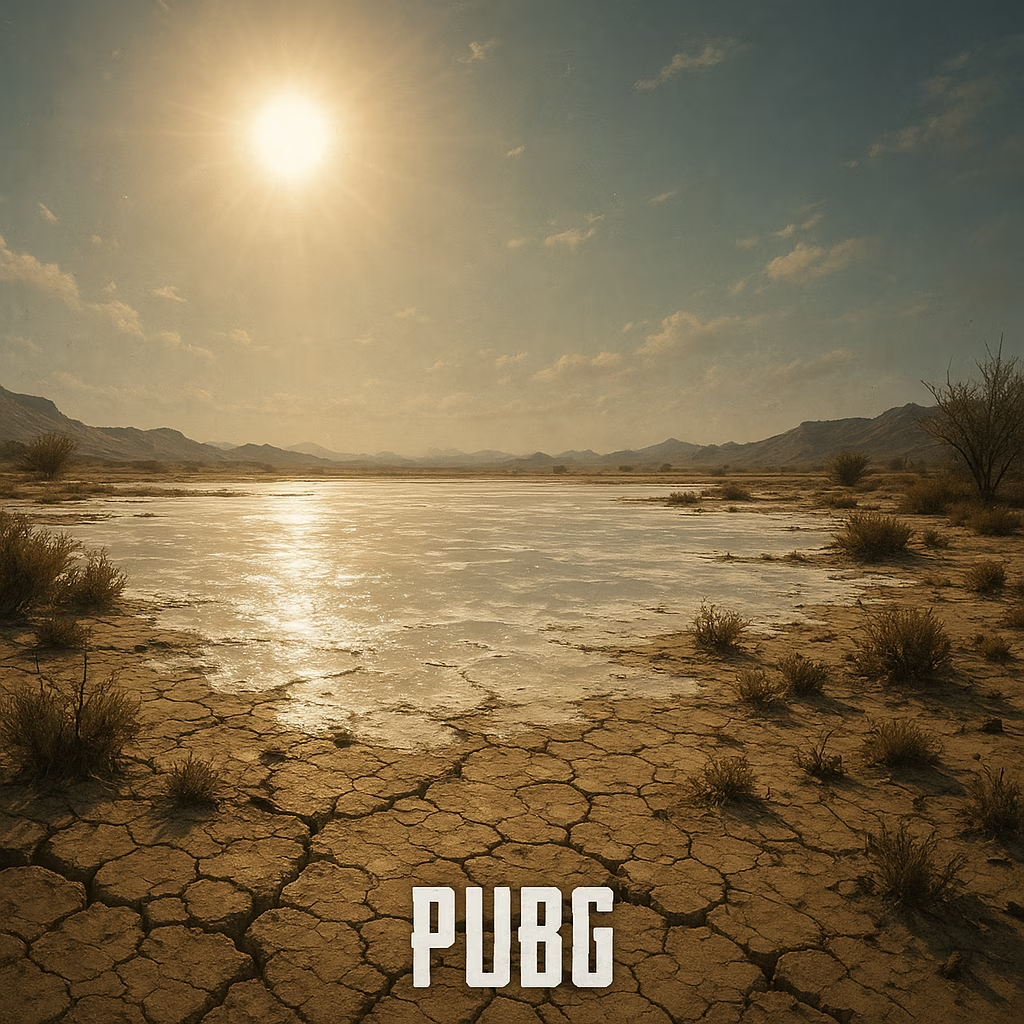
The desert map, once a promising set of screenshots, is now a hallowed and feared arena, its dunes hiding secrets and its abandoned city offering close-quarters combat that feels as intense as a knife fight in a phone booth. New maps have followed, each more inventive than the last, from frozen tundras to dense, neon-lit urban sprawls.
The true genius of PUBG Mobile's journey was its dual nature:
-
A Technological Marvel 🚀: It shattered preconceptions about mobile hardware limitations.
-
A Cultural Chameleon 🦎: It demonstrated an ability to adapt its presentation to resonate across diverse markets without breaking its core gameplay loop.
In the end, the collaboration between Bluehole's visionary design and Tencent's logistical and technical prowess didn't just port a game; it launched a phenomenon. It turned every bus ride, every lunch break, and every waiting room into a potential battleground, democratizing high-stakes digital survival in a way that was once unimaginable. The game's ongoing evolution continues to be watched by the industry with the rapt attention of scholars studying a living, breathing, and incredibly profitable organism.