PUBG's 2019 Esports Revolution: A New Era of Global Battle Royale Competition
The 2019 PUBG esports blueprint masterfully introduced a nine-region global structure and a thrilling All-Star Showdown, transforming the game into a legitimate, globally recognized competitive sport.
As we look back from 2026, it's wild to think that the seismic shift in PUBG esports all kicked off back in 2019. I still remember the buzz when they announced their first proper global league structure—it felt like the game was finally stepping out of its chaotic early-access phase and putting on a tailored suit, ready for the big leagues. The blueprint they laid out back then, with nine distinct regions each carving their own path to glory, was more than just a tournament schedule; it was the foundation for the global competitive ecosystem we know today. It transformed the game from a survival sandbox into a legitimate sport, complete with its own heroes, villains, and legendary moments that we still talk about.
The Grand 2019 Blueprint: A World Divided into Nine Arenas
The core of the 2019 plan was its ambitious global structure. PUBG Corporation decided to split the competitive world into nine separate regions. This wasn't just a simple geographical divide; it was like planting nine different gardens, each with its own climate and soil, to see what kind of champions would grow. The goal was crystal clear: let the best from each region battle through their local circuits, with the ultimate prize being a spot at the global championship in November to crown the year's undisputed kings.
Here’s how the 2019 regional breakdown looked:
| Region | Tournament Structure | Key Feature |
|---|---|---|
| North America | Pro League | Structured, league-based competition |
| Europe | Pro League | Fostered long-term team rivalries |
| China | Pro Circuit | Open, tournament-based format |
| Korea | Pro League | Home to incredibly mechanical players |
| Japan | Pro Circuit | A rising region with passionate fans |
| Southeast Asia | Pro Circuit | Known for aggressive, unpredictable plays |
| Latin America | Pro Circuit | High-energy, chaotic early games |
| Oceania | Pro Circuit | Battling for recognition on the global stage |
| Taiwan/Hong Kong/Macau | Pro Circuit | A region with a fiercely independent meta |
Six regions operated with a Pro League system. Think of this like a traditional sports season—consistent teams playing scheduled matches over time, building narratives and rivalries. The other three regions used a Pro Circuit format, which was more like a series of high-stakes poker tournaments, open to more contenders and often producing shocking dark horse stories. This dual-structure approach was genius; it catered to different competitive cultures, ensuring no playstyle was left behind.
The Glittering Centerpiece: The All-Star Showdown
Scheduled right in the middle of the competitive calendar was the event everyone was hyped for: the All-Star exhibition matches. This was the dessert in the middle of a five-course meal. It was designed to be pure, unadulterated fun and spectacle, completely separate from the grueling points race of the main leagues. Here, the biggest names, the most popular streamers, and the flashiest players from around the world were thrown together. The pressure of qualifying was off, allowing for insane, highlight-reel plays that felt less like military sim tactics and more like a superhero blockbuster. It was PUBG’s way of saying, "Hey, remember this game is also about causing beautiful, explosive chaos?"
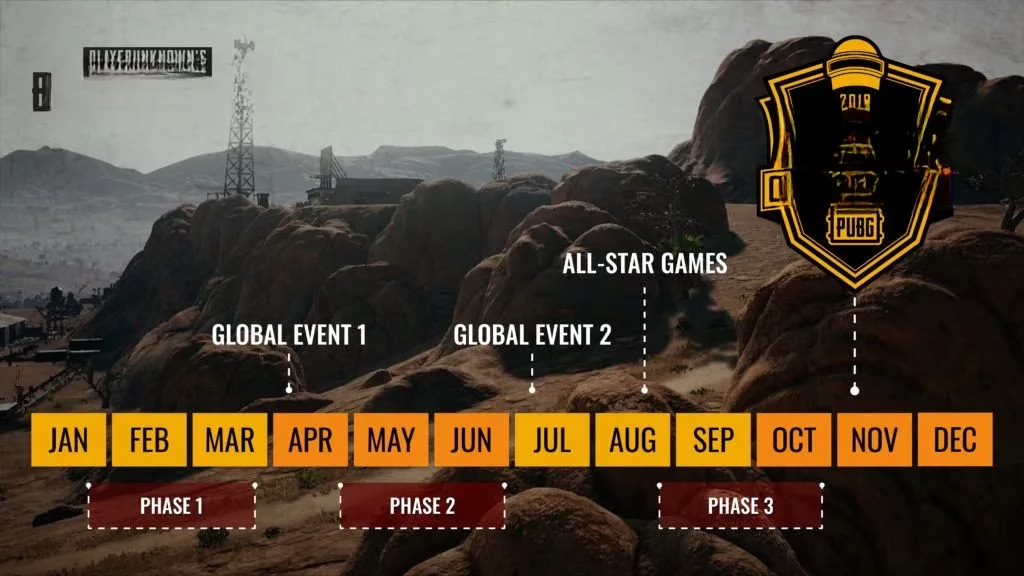
The official announcement art that started it all. Look at that sky full of planes—it was a promise of battles to come.
Seeding the Future: The Importance of Specialized Events
The 2019 announcement was about more than just the main leagues. It signaled a commitment to building a complete esports scene. Just before the big reveal, news broke about BenQ sponsoring a 48-woman, women-only PUBG tournament in China. This was a crucial, often overlooked seed. While the global league was the mighty oak tree, events like this were the vital undergrowth, creating dedicated spaces for underrepresented groups to compete and shine. It showed an understanding that a healthy ecosystem needs diversity at all levels. From this early women's tournament sprouted the dedicated female circuits and mixed-roster challenges that are common in 2026.
Legacy and Evolution: From 2019 to Today
Reflecting from 2026, the 2019 framework was far from perfect. The meta was different, the maps were fewer, and the competitive rules were still being figured out. But its importance cannot be overstated. It provided the first stable platform. It gave organizations a reason to invest in proper PUBG teams, not just squads of streamers. It created the first generation of true PUBG pros whose names are now etched in the game's history.
The game itself was evolving in parallel. Remember when they added DC's Harley Quinn and The Joker? That crossover event in late 2018/early 2019 was a sign of things to come—PUBG wasn't afraid to have fun and experiment with its identity, even as it built a serious sport. That balance between competitive integrity and engaging content is a tightrope the scene has walked ever since.
In essence, the 2019 esports launch was PUBG's declaration of maturity. It was the moment the game stopped being just a viral phenomenon and started building a legacy. The regional structures established then are the ancestors of today's hyper-specialized leagues. The All-Star concept evolved into the massive celebrity invitationals we have now. That initial women's tournament paved the way for greater inclusivity. Looking back, 2019 wasn't just a season; it was the Big Bang for PUBG as a lasting esport, and we've been watching the universe expand ever since. It was the foundation stone for everything that followed, a year that proved a battle royale could have a heart that beat to the rhythm of professional competition.