PUBG's Weekly Ban Wave Shows Anti-Cheat Pressure Is Still On
PUBG's anti-cheat weekly ban notice confirms permanent bans for cheaters, with anonymized nicknames and in-game reporting.
As a longtime PUBG: BATTLEGROUNDS player, I always pay attention when the anti-cheat team publishes its weekly enforcement update, because those notices are one of the clearest public signals that the fight for a fair lobby is still active. The latest notice covers the investigation period from October 5 to October 11, 2026, and confirms that permanently banned accounts are still being removed in batches. I reviewed the details, and the core message is simple: illegal software and misconduct carry real consequences, even if the public list is carefully anonymized.
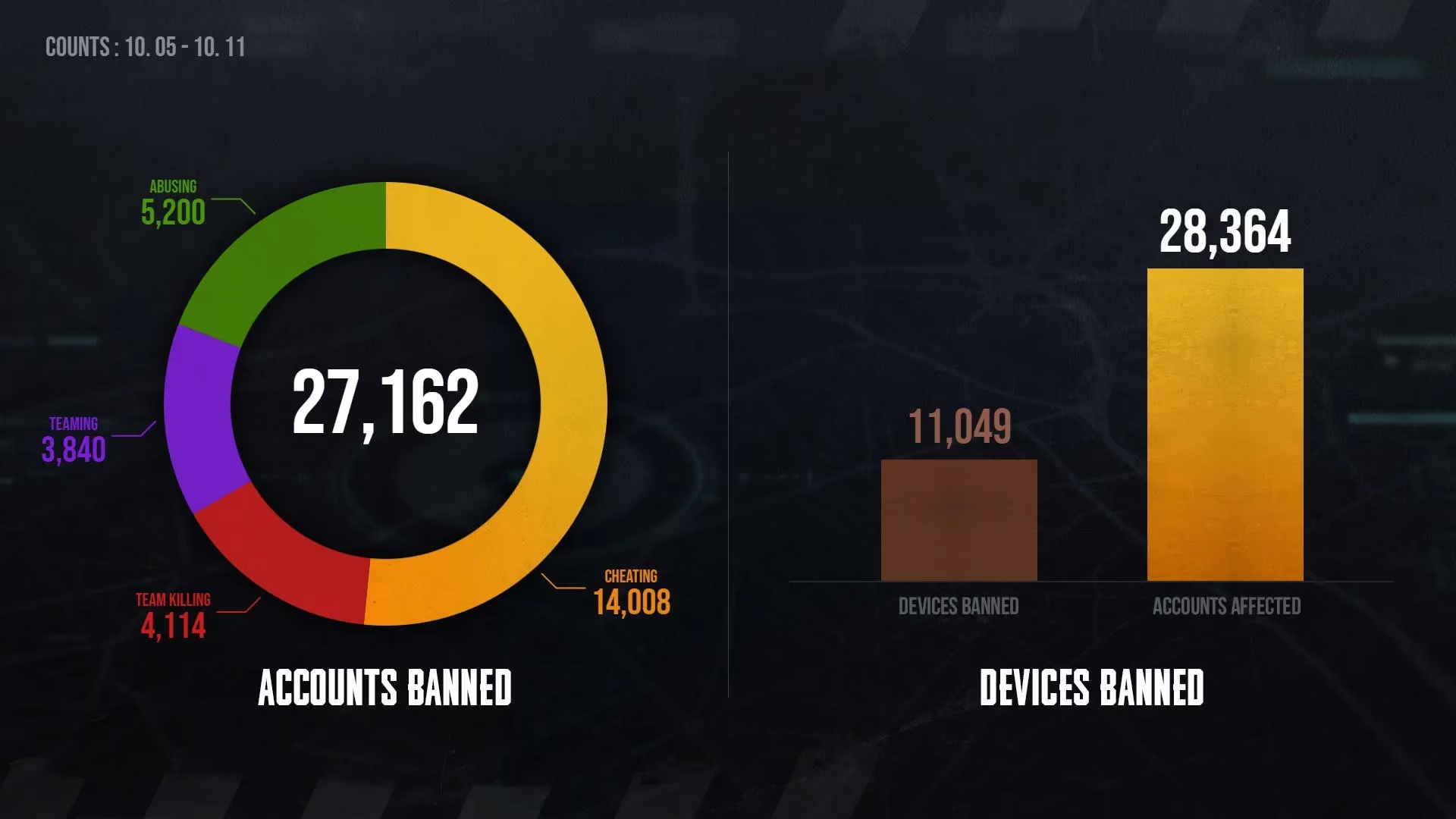
The banned players list attached to the notice shows the in-game nicknames of permanently banned accounts, but the first three letters of each nickname have been replaced with '*'. I think that detail matters. It gives the community transparency about enforcement without turning the list into a tool for harassment or witch hunts. From my perspective as a player who spends time in both casual and ranked lobbies, that balance is important. I want cheaters removed, but I also want the process to stay focused on account integrity and rule enforcement rather than public shaming.
| Key detail | What the notice says |
|---|---|
| Investigation period | 2026/10/05–2026/10/11 |
| Enforcement action | Permanent bans for violating rules of conduct |
| Public list format | In-game nicknames with the first three letters replaced by '*' |
| Reporting path | In-game reports first; PUBG Support for additional assistance |
| Account protection | Steam Guard Mobile Authenticator recommended |
What I appreciate most is the reminder that reporting starts in-game. The notice asks players to report illegal software and misconduct through in-game reports first and to contact PUBG Support only if additional assistance is needed. That flow makes sense to me. In-game reports give the anti-cheat and operations teams the match context, timestamps, and evidence they need, while support channels can handle follow-up cases that require more detail. As a player, I’ve learned that a clear report with specific context is more useful than a vague complaint after the match.
The notice also pushes account security, and I think that deserves more attention than it usually gets. It asks players to make sure their valuable accounts are not abused or banned because of illegal software or misconduct, and it recommends signing up for Steam Guard Mobile Authenticator. I already treat two-factor authentication as basic hygiene for any account I care about, and I’d encourage every PUBG player to do the same. A compromised account can be used by someone else, and the original owner may end up dealing with the fallout. Protecting the account is part of protecting the lobby.
I don’t see weekly ban notices as a PR exercise. I see them as a deterrence mechanism and a transparency check. The anti-cheat team says it highly values player interest and opinions that contribute to PUBG’s anti-cheat efforts, and that it will do its best to provide a fair gaming environment. That is the standard I hold the team to. I want fewer suspicious deaths, fewer instant headshots from new accounts, and fewer matches where the outcome feels decided before the first circle closes. Permanent bans will not solve every problem overnight, but consistent enforcement is how trust is rebuilt.
For the week of October 5–11, 2026, the message from the PUBG: BATTLEGROUNDS Anti-Cheat Team is clear: rule breakers are being removed, reports matter, and account security matters. I’ll keep reporting what looks wrong, I’ll keep my own account locked down, and I’ll keep watching these weekly updates. A fairer game is not just the anti-cheat team’s job. It is a shared player effort, and this latest ban list is a reminder that the effort is still underway.