Reading PUBG's Weekly Banned Player List as a Fair-Play Ritual
PUBG's weekly anti-cheat notice exposes permanently banned accounts for illegal software and misconduct, urging Steam Guard Mobile Authenticator.
I open the weekly PUBG anti-cheat notice the way a lighthouse keeper sweeps the morning fog, slow and deliberate, looking for shapes that should not be there. This week’s report arrived with the usual quiet heaviness: a list of permanently banned accounts, each one a small tombstone for a player who tried to bend the rules of fair play.
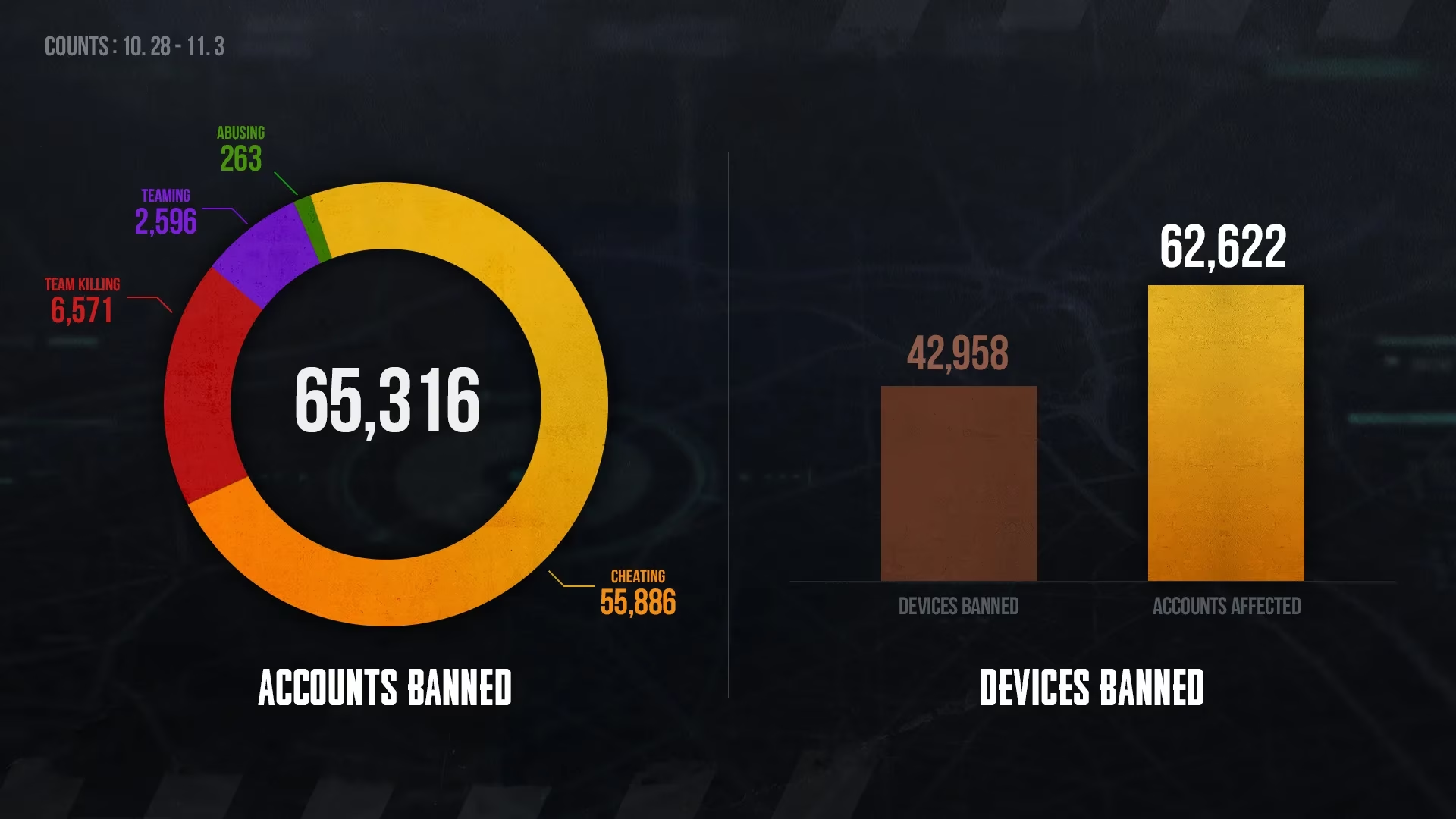
Reading the banned list is not about gloating. It is more like watching a gardener pull weeds after a storm. The anti-cheat team does not announce every root they removed, but the weekly report lets ordinary players feel the soil being turned. The list shows the in-game nicknames of permanently banned accounts, and the first three letters of each nickname have been replaced with "*". That small act of masking creates a strange effect: the names become half-familiar, like hearing a radio call break up over a hilltop. You recognize enough to know someone was there, but not enough to feel sympathy.
The rules broken are not abstract. Illegal software and misconduct can include aimbots, wallhacks, and other tools that turn a survival shooter into a rigged weather vane. When a player uses those tools, every honest firefight becomes a chess match where the opponent can see your pieces before you move. The weekly list is PUBG’s attempt to restore the board.
| What the notice includes | What I take from it |
|---|---|
| Permanently banned account nicknames | The most serious violations can lead to permanent loss of access |
| First three letters masked with "*" | The list balances transparency with privacy |
| Investigation period | A clear seven-day window of enforcement |
I also noticed the repeated reminder: report illegal software and misconduct through in-game reports first. That is the first door to knock on. If the hallway remains dark and you need more help, you can contact PUBG Support. I think of in-game reporting as a flare gun; it signals exactly where the trouble is, but it only works if honest players actually fire it. Too often we shrug and move to the next lobby, leaving the debris in the road for someone else.
The notice also urges players to protect their accounts with Steam Guard Mobile Authenticator. This is not a decorative suggestion. An account without Steam Guard is like a coastal house with no shutters during a hurricane; the storm will find the loose latch. The anti-cheat team included a link to how to set it up, and it is worth doing before you become the next cautionary tale. I signed up a long time ago, and it remains one of the few security tools that gives me more peace than friction.
There is another layer to these notices that I have come to appreciate. The Anti-Cheat Team says they highly value player interest and opinions. That is not boilerplate to me. Every report, every clip, every suspicious replay is a grain of sand added to a larger barrier. The team cannot be in every match, but the community can, and the weekly list is proof that the barrier is being built. They promise to do their best to provide a fair gaming environment, and the list is part of that promise.
In 2026, with so many online games racing for attention, PUBG’s anti-cheat ritual still matters. The banned list is not entertaining; it is a reminder that fairness requires constant pressure, like holding back a river that never stops testing the dam. I read it not to feel superior, but to remember that the match I queue for tonight is slightly cleaner because someone, somewhere, kept watching. If you see something strange in your next drop, do the unglamorous thing: report it. The weekly list is waiting for the names that do not deserve to stay.