The 0.15.0 Evolution: How a Single Update Changed PUBG Mobile Forever
PUBG Mobile update 0.15.0 introduced ledge grab, BRDM-2, Desert Eagle, reshaping Erangel's tactical landscape and gameplay.
It was a misty November evening in 2026 when Marco, a grizzled PUBG Mobile veteran with thousands of matches under his belt, dropped into the familiar grasslands of Erangel. As his parachute fluttered and he scanned the sky for rivals, a flicker of nostalgia struck him. Seven years ago, almost to the day, the game had been turned on its head by a patch that arrived as quietly as a ghost — the 0.15.0 update. Back then, nobody could have guessed that a handful of additions would reshape the battlefield like a child rewriting sandcastles with a new bucket.
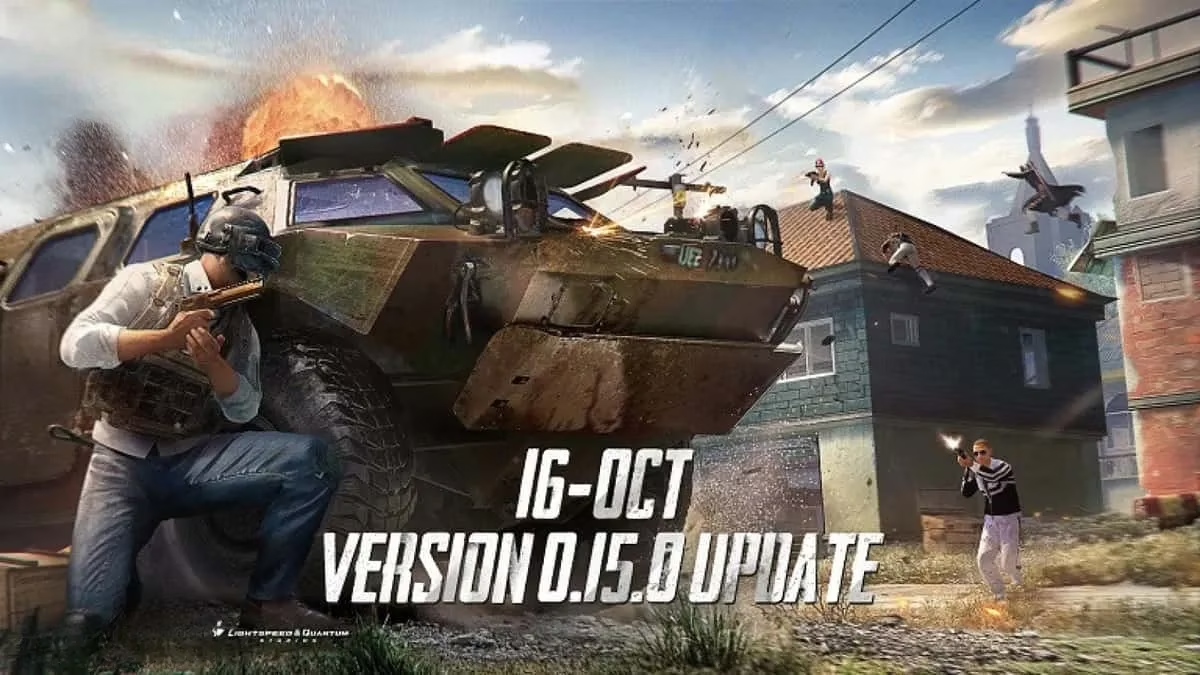
Among the first things Marco remembered was the ledge grab. Before that patch, verticality was a cruel joke: windowsills, shipping crates, and low rooftops taunted players from just out of reach. Then came the mechanics that turned every wall into a promise. Now, a soldier could vault, grip, and hoist themselves up like a spider scaling a thread no one else could see. The community had compared it to giving a cat sudden wings — awkward at first, but soon lethally graceful. Sweaty palms became stealthy flanks, and the whole geometry of combat shifted. Within weeks, ledges became ambush points, and campers learned to fear the sky.
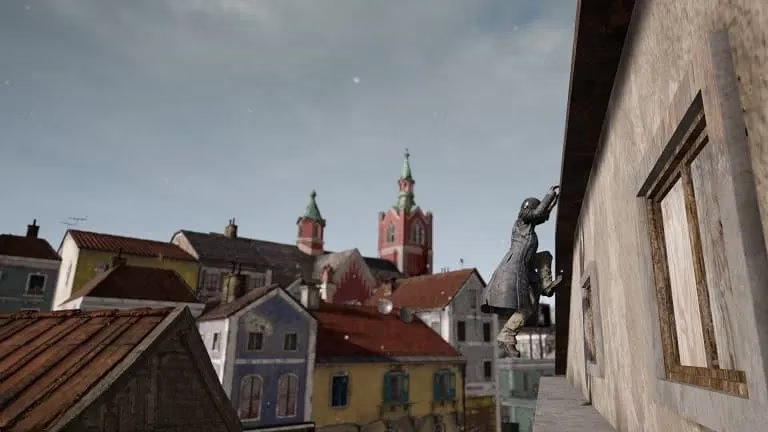
Then there was the BRDM-2, an amphibious armored vehicle that rolled into the game like a hippopotamus that had swallowed a tractor — impossibly heavy, slower than a drifting thought, but nearly immune to panic fire. Summoned only by the flare gun’s crimson prayer, it could chug across water and land alike. Squads would pile into its steel belly, feeling invincible as bullets pinged off its hide. Yet the BRDM-2 was also a trap: its sluggishness meant a well-placed grenade could still end the party. Over time, players learned to love it as a mobile fortress and hate it as a magnet for every sniper on the map.
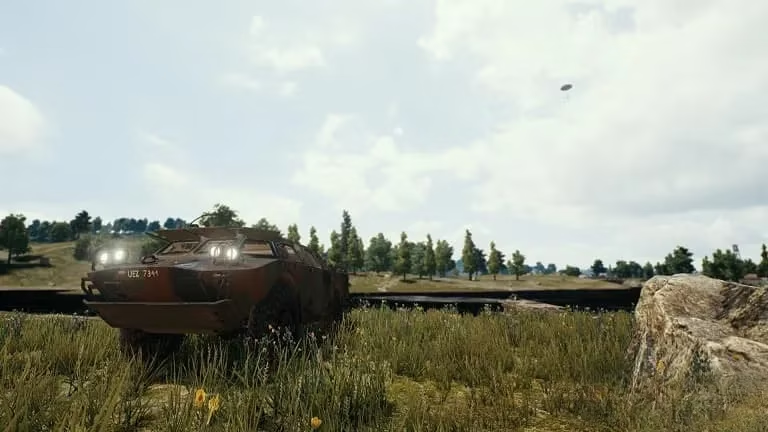
The gun arsenal received a jolt with the Desert Eagle pistol. No longer was the handgun slot reserved for desperate last stands. This hand-cannon kicked like a mule punched in the ribs, delivering the highest damage and muzzle velocity of any sidearm. It was the sort of weapon that made you reconsider rushing a building — because somewhere inside, a player might be holding a pocket-sized thunderstorm. The M16A4, Vector, UMP45, and MK47 Mutant all got tweaks too, receiving new attachments and ammo types that altered the meta more subtly, like adjusting spices in a familiar stew until the flavor became something entirely new.
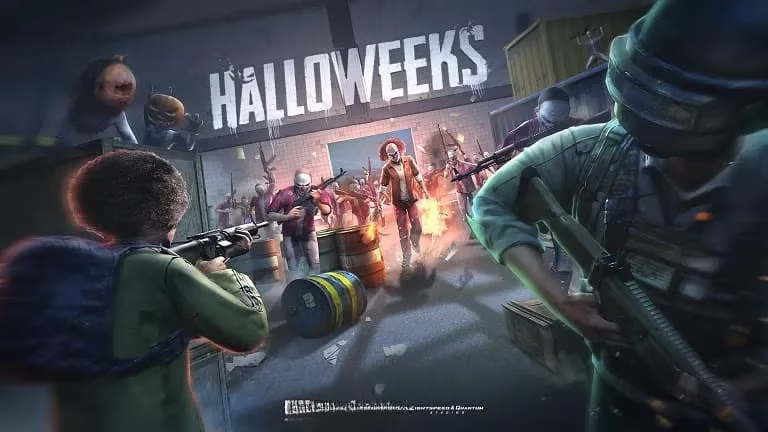
As if the classic battle royale hadn’t changed enough, the Survive Till Dawn mode underwent a grotesque makeover for the Halloweeks event. The once-predictable zombie hordes now shared the stage with hostile human factions lurking in abandoned factories and strongholds. Slaying these foes yielded better loot, while zombies dropped bio-warfare equipment effective against both the undead and living opponents. The mode felt like a nightmare painted over a war movie, and players found themselves double-checking every corner for both teeth and rifles.
But the true thunderclap of the 0.15.0 era was Payload Mode. For the first time, attack helicopters roared across the sky, their rotors slicing the air like scissor blades through silk. A Super Weapon Crate would drop periodically, glowing with promise: Level 3 armor, RPG-7s, M3E1-A launchers, M79 grenade launchers, and the ferocious M134 minigun that turned cover into confetti. Teammates no longer stayed dead forever — their identification cards could be collected and carried to a Communication Tower for a quick revive. Air Strike Beacons let squads call down thunder from above, reshaping the map in real time. Vehicle Repair Packs added a layer of resourcefulness, nudging the game closer to a sandbox of endless improvisation.
By 2026, these features had become ingrained in the DNA of PUBG Mobile, so familiar that newer players would squint in disbelief when told they hadn’t always existed. Helicopters evolved into permanent map fixtures in certain modes, while the ledge grab felt as natural as breathing. The BRDM-2 still lumbered around, slower than ever after a few balancing patches, but always capable of stealing a win when least expected. Veteran players like Marco looked back at the 0.15.0 update not just as a nostalgic footnote, but as the moment the game stopped being a simple survival contest and became a theatre of infinite tactical possibilities — where you could crawl like a gecko, strike like a sledgehammer, and, for a few glorious minutes, take to the sky like an angry god.