The Eternal Struggle: My Journey Against the Shadows in the Battlegrounds
Experience the intense battle for Chicken Dinner and survival, as cheaters and hacks threaten the soul of the digital arena.
I stand on the precipice of another round, the familiar hum of the plane a lullaby to my frayed nerves. Yet, beneath the adrenaline-fueled anticipation lies a persistent, bitter sediment—the shadow of the cheater. It has been nearly a decade since the phenomenon first marred our digital island, a blight that, for a time, threatened to consume the very soul of the hunt. I remember the early days, the raw, unfiltered joy of a true victory. Now, as I descend, I carry the weight of suspicion, a necessary armor in a world where the rules are sometimes written in invisible ink. The battle for the Chicken Dinner has always been one of skill, wit, and survival, but for years, it was also a silent war against phantoms who refused to play by the same sun.
The Fractured Reality: When Walls Have Eyes and Bullets Find Ghosts
My first true encounter with the impossible was not a dramatic firefight, but a quiet, chilling realization. I was nestled in the upper floor of a Rozhok apartment, listening to the symphony of distant gunfire. Then, a single, precise shot shattered the window and my helmet. The source? A barren field, 300 meters away, with no line of sight. It was an aim-bot, a digital puppeteer turning a player into an unerring instrument of death. This was just the beginning. Soon, the landscape of the battlegrounds fractured. I would see players moving with impossible, blurring haste—speed hackers turning the terrain into a meaningless blur. Others possessed a preternatural awareness, their crosshairs glued to my position through solid concrete and dense foliage, victims of the dreaded wall-hack. The fundamental contract of the game—that we all operated within the same physical laws—was broken. Every rustle of grass, every cautious peek, was now filtered through a lens of doubt. Was that a skilled player, or a specter cheating death itself?
The betrayal cut deepest in the late-game circles. After a grueling twenty-minute struggle of tactics and tension, to be cut down by someone who saw you through the final ridge was not a defeat; it was a theft. It stole the narrative, the earned climax of survival. The community's outcry became a roaring flame on forums and subreddits. We were not just losing matches; we were losing faith in the arena itself.
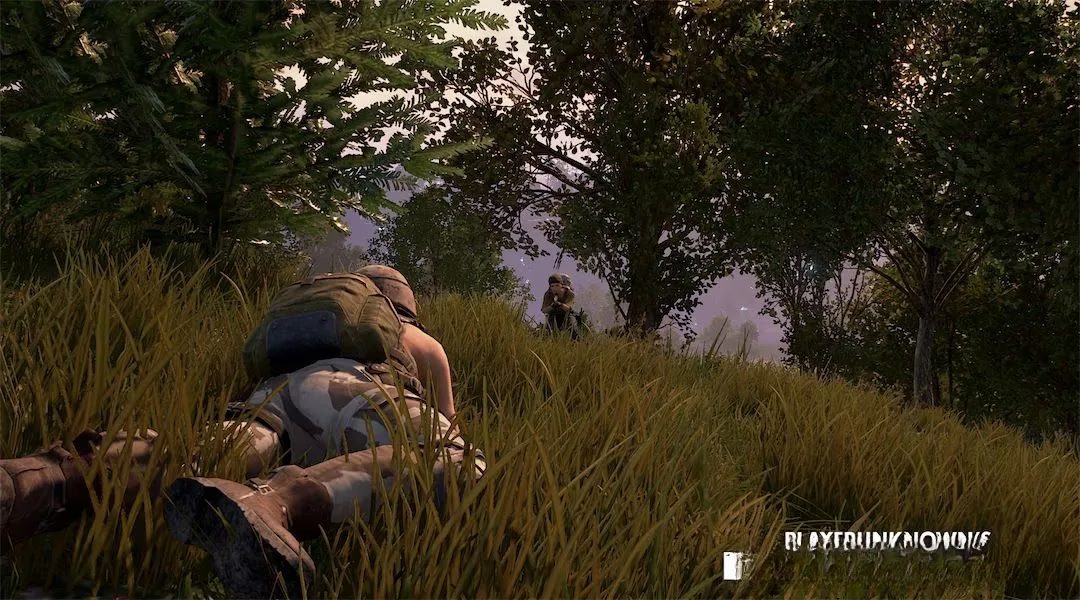
The Escalation: A Metamorphosis of Malice
Just as we adapted our strategies, the shadows evolved. Killing a suspected cheater no longer brought relief. I recall a frantic squad fight near Georgopol crates. We coordinated, flanked, and finally downed an opponent who had been displaying uncanny accuracy. A moment of triumph. Then, before our eyes, he stood up—fully healed, as if our bullets were but a brief rain. The newest scourges were instant self-revive and healing hacks, rendering the core mechanics of damage and recovery utterly meaningless. It created a surreal, nihilistic gameplay loop. The cheaters grew bolder, more theatrical, treating the battlegrounds as their personal sandbox for chaos. This was no longer about gaining an unfair edge; it was about dismantling the experience for everyone else, a performance of pure impunity.
The emotional toll was palpable. The shared language of players shifted from tactics to grievances:
-
The Paranoia: "Was that lag, or is he tracking me through the hill?"
-
The Resignation: "Don't bother, he's clearly using something."
-
The Anger: A collective fury directed not just at the cheaters, but at the perceived slowness of justice.
The game's environment, once a canvas for emergent stories, risked becoming a sterile testing ground for malicious software.
The Dawn of Reckoning: A Stance Forged in Fire
Amidst the frustration, a resolve hardened, both within the community and, crucially, from the architects of our world, PUBG Corp. The initial response felt like droplets in a desert—a ban wave of 100,000 accounts was announced. While a positive gesture, the number felt abstract, a small dent in a vast, shadowy army. We wondered: Was this a sincere crusade or mere public relations? The turning point, for me, was not a statistic, but a shift in philosophy. PUBG Corp's commitment solidified from reactive to proactive. They stopped just banning accounts and began targeting the source. The collaboration with Tencent in China, leading to the arrest of 120 cheat-makers, sent a seismic message. This was no longer a game of whack-a-mole; it was a war on the industry of unfair play itself. The battle moved from the digital fields of Erangel to courtrooms and server farms.
The anti-cheat systems themselves underwent a silent revolution. Machine learning algorithms now constantly sift through terabytes of gameplay data, looking for the subtle, inhuman patterns—the perfect 100% headshot ratio over 50 games, the consistent sub-millisecond reaction times. Hardware bans made it costlier for offenders to simply return with a new account. A dedicated reporting system, empowered by the community's vigilance, became a powerful tool. We were no longer just victims; we were scouts in this new war.
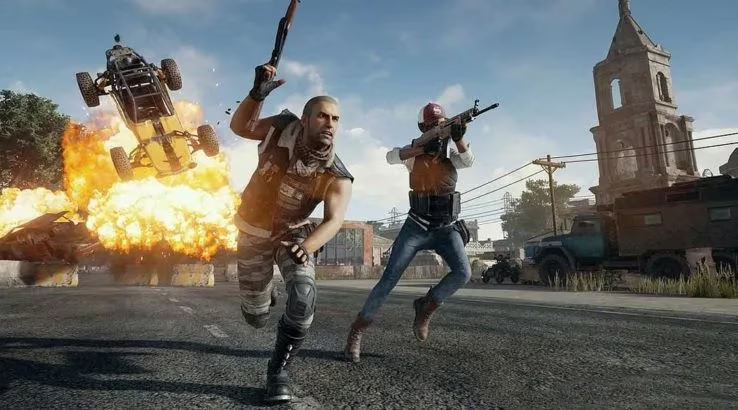
The Landscape of 2026: An Uneasy, Earned Peace
Today, in 2026, the battlegrounds are not a utopia. The shadows have not been fully banished; they have been forced into deeper hiding. The blatant, game-breaking cheats of the past are now rare, spectacular events when they occur, met with swift and permanent eradication. The current struggle is more nuanced, against subtle assistance programs—recoil macros, slight information overlays—the gray area between supreme skill and synthetic aid. Yet, the difference is night and day.
I can land, loot, and fight with the core belief that my opponent and I are bound by the same rules of physics and chance. The tension once born of paranoia has largely returned to its pure form: the tension of genuine competition. The community's spirit, once poisoned by cynicism, has rejuvenated. We share clips of incredible plays, not just outrageous hacks. The Chicken Dinner, when it comes, tastes of earned glory, not hollow luck or futile struggle against an omnipotent foe.
PUBG Corp's journey mirrors our own—from feeling overwhelmed by a chaotic force to establishing a diligent, ongoing guardianship. The following table contrasts the era of chaos with the current state of vigilance:
| Aspect | The Past (Era of Chaos) | The Present (2026 - Era of Vigilance) |
|---|---|---|
| Prevalent Cheats | Blatant: Aimbots, Speed Hacks, Wallhacks | Subtle: Soft-aim, Recoil Macros, ESP (rare) |
| Developer Response | Reactive, large but infrequent ban waves | Proactive, continuous detection & legal action |
| Player Sentiment | Widespread paranoia and frustration | Cautious trust, focus on skill & community |
| Impact on Gameplay | Core mechanics broken, unpredictable outcomes | Fair competition largely restored |
My Reflection in the Blue Zone
This long conflict has shaped not just the game, but my relationship with it. I fight now with a veteran's appreciation for the fairness we've reclaimed. Every clean snipe, every victorious squad wipe, is a small victory in that larger war. The cheaters sought to make the game meaningless, but in their defiance, PUBG Corp and the loyal player base gave it a deeper meaning. It became a testament to the value of a fair fight. The flame of that early dumpster fire, as once described, has indeed been reduced to embers, constantly watched and stamped upon. I board the plane now with hope as my companion, not just suspicion. The shadows may still linger at the edges of the map, but the sun, once more, shines mostly clear on the battlegrounds. The fight for integrity, I realize, is the only fight that never truly ends, and it's one we must choose to wage every single day we drop in.